
Yes, they can, and it does happen. A dirty number plate is not just a cosmetic issue. Under UK law, your registration must be clearly legible at all times, and if it is not, an officer has grounds to stop you. That said, a bit of road spray after a wet commute is very different from a plate that has not been cleaned in months. This article explains exactly where the line sits, what the consequences are, and what you can do to stay on the right side of the rules.
The requirement to display a readable number plate is set out in the Road Vehicles (Display of Registration Marks) Regulations 2001. The legislation does not specify a precise level of dirtiness that triggers an offence. What it does require is that your registration mark is clearly visible and easily legible at all times when the vehicle is being used on a public road.
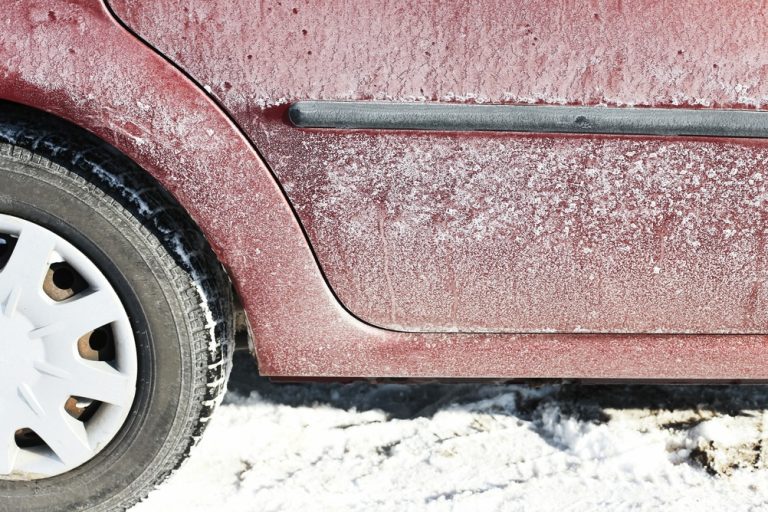
That word “legible” is the key. If your plate cannot be read because it is obscured by mud, snow, grime, or anything else, you are potentially committing an offence, regardless of how the obscuration came about. The law does not distinguish between accidental dirt and deliberate covering.
Police officers have discretionary powers when it comes to stopping vehicles, and a plate they cannot read gives them a lawful basis to do exactly that. Given that random roadside plate checks are becoming more common, it is worth understanding that this is not just a theoretical risk.
If you are stopped for an obscured or unreadable plate, the outcome depends on what the officer finds and how they choose to handle it.
In straightforward cases where the plate is simply dirty, you are likely to receive a verbal warning and be asked to clean it. Officers generally use common sense here. A driver who has clearly just come off a muddy country road in winter will be treated differently from one whose plate looks as though it has not seen water in six months.
Where a fixed penalty notice is issued, the fine can be up to £1,000. That figure applies to deliberate obscuring or non-compliant plates, and it reflects the seriousness with which the law treats anything that prevents a vehicle from being identified. The hidden consequences of an illegal plate extend further than the fine itself, and it is worth understanding the full picture.
There is also the question of ANPR cameras. These systems are in use across the UK road network and rely on your plate being clean and correctly formatted to read your registration accurately. A plate that is too dirty to be captured by an ANPR camera can trigger an alert even before an officer is involved.
A dirty or damaged plate will also cause problems at MOT time. Examiners check that both plates are present, clearly legible, and in good condition. A plate that is too grubby to read clearly will be flagged as a reason to fail. Our guide on why number plates fail an MOT covers this alongside the other common reasons plates are rejected at inspection.
It is also important not to confuse dirtiness with fading. A plate that has physically deteriorated, with characters that are no longer crisp and legible, presents a separate problem. Our article on faded number plates and UK legal requirements explains the distinction and what action to take.
There is no prescribed cleaning schedule in UK law. The standard is simply that the plate must be legible when you are driving. In practical terms, that means checking both plates regularly and cleaning them whenever visibility is compromised.
Here are some straightforward habits that help:
Sometimes what looks like a cleanliness issue turns out to be something else. If your plates are regularly difficult to read even when clean, it may be that they have deteriorated to the point where they need replacing rather than just washing.
Plates can fade, crack, or discolour over time, particularly if they were not made to a high standard in the first place. A faded plate is not a clean plate, and no amount of washing will restore legibility once the characters have deteriorated. The appropriate response in that case is to replace the plates entirely.
Tinted or smoked finishes are another common cause of legitimate concern. These reduce the reflectivity of the plate, which affects both human readability and ANPR performance. Our article on smoked or tinted number plates under UK law explains why these finishes are not permitted for road use and what to look for when buying a replacement.
Similarly, if your plates are mounted poorly or at an angle, cleaning will not resolve the underlying visibility problem. A plate that keeps coming loose creates a different but equally important issue. You can read more about why number plates keep falling off and how to secure them correctly.
Being stopped by the police for a plate-related matter is straightforward to handle calmly. Stay composed, pull over safely, and engage with the officer politely. If the issue is genuinely just a dirty plate, acknowledge it and confirm you will clean it at the earliest opportunity.
Officers have discretion in how they respond, and in the majority of cases involving accidental dirtiness, a warning is the outcome rather than a penalty. What matters is that the plate itself is legal, correctly formatted, and structurally sound. If the officer finds that the underlying plate is non-compliant, the situation becomes more serious regardless of whether the dirtiness was intentional.
If you are unsure whether your plates meet the current standard, our 4D legality guide and our full breakdown of MOT regulations for number plates are useful references.
Plate construction has a bearing on how easily a plate cleans up and how well it holds its finish over time. Plates made with high-quality reflective materials and a smooth laminate surface are generally easier to clean and more resistant to UV degradation.
Our 2D printed number plates offer a clean, flat surface that is straightforward to wipe down, while 3D gel number plates and 4D plates use raised characters that remain highly legible even when the plate picks up general road dirt. All of our road-legal plates are built to the BS AU 145e standard and made from approved materials designed for everyday driving conditions.
If you drive a motorcycle, our bike plates are made to the same standard in a format suited to rear-mounted positions. For those who need a compact format, square number plates and hex Lambo-style plates are also available in fully compliant specifications.
If you have any questions about whether your current plates are road legal or need replacing, get in touch with us and we will help you find the right option. You can also explore our number plate accessories for fitting hardware that keeps plates secure and correctly positioned.
A clean, well-fitted plate made to the correct standard is one of the simplest things you can do to keep your vehicle roadworthy and avoid unnecessary attention. It costs very little and takes almost no time.