


If you’re considering 4D number plates for your company vehicle, you need clear answers on legality, compliance and practical risks. Whether you manage a fleet of ten cars or drive a single leased vehicle, understanding the rules around raised-character plates can save you from fines, insurance complications and ANPR issues.
This guide explains exactly what’s allowed, what to check with suppliers, and how to stay compliant when fitting 4D plates to company cars.
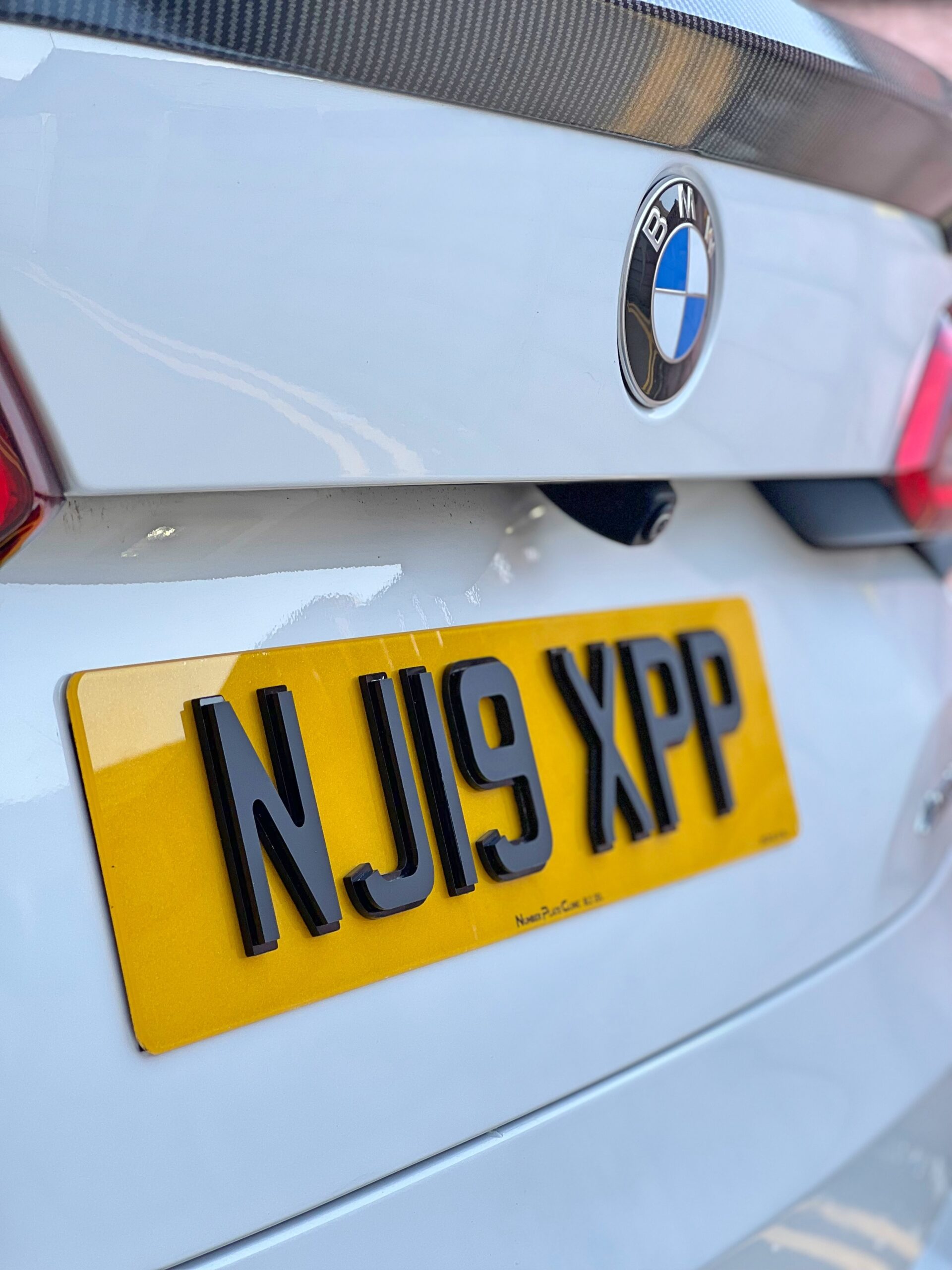
4D number plates use laser cut acrylic characters that sit proud of the plate background, creating a raised, three dimensional effect. Unlike traditional flat printed plates or 3D gel number plates where resin sits on the surface, 4D plates feature individually cut letters and numbers fixed to a backing plate.
The result is a crisp, modern look that many drivers find more premium than standard 2D printed plates. However, the key question for company car users isn’t about appearance it’s whether these plates meet DVLA regulations and satisfy lease, insurance and fleet policy requirements.
Standard number plates use printed characters on a reflective backing. 4D plates add physical depth through precision-cut acrylic letters, typically 3 to 5mm thick. This raised profile must still comply with strict readability, spacing and material standards to remain road legal.
The styling may be distinctive, but compliance requirements stay the same. Any number plate fitted to a vehicle on UK roads must meet current British Standard specifications, regardless of whether it uses 2D printing, 3D gel or 4D laser cut construction.
Yes, 4D number plates are legal in the UK but only when they’re manufactured to meet DVLA regulations and the relevant British Standard. The style itself isn’t prohibited; the issue is whether the specific plate you’re buying complies with the rules that apply to all number plates.
Every road legal number plate in the UK must meet these core requirements, set out in DVLA regulations:
4D plates that meet all these rules are fully road legal. Plates that don’t for example, using incorrect fonts, spacing or non-reflective materials are not, regardless of style.
The British Standard for number plates (BS AU 145e) sets out manufacturing, reflectivity and durability requirements. Only [registered suppliers](http://34.89.104.254/product-category/number-plates/4d-acrylic-plates/road legal/) can legally produce and sell road legal plates, and they must verify your identity and vehicle documents before supplying you.
When you buy 4D plates for a company car, check that the supplier is DVLA-registered and provides plates marked with BS AU 145e. This mark confirms the plate has been made to regulation and tested for reflectivity and weather resistance.
Fitting aftermarket number plates to a company car brings additional factors beyond general DVLA compliance. You may need approval from your employer, the leasing company or fleet manager, and you should confirm that any modifications won’t breach your contract or insurance terms.
Most company cars are leased rather than owned outright. Lease agreements often include clauses about modifications and end of lease condition. Even a simple number plate swap could be considered a modification if it wasn’t part of the original specification.
Before ordering 4D plates, review your lease contract or speak to your fleet administrator. Some leasing companies have no objection to compliant aftermarket plates, while others require written permission or specify that the original plates must be refitted before return.
Large organisations often have fleet policies that standardise vehicle appearance or restrict modifications. Your company may prefer uniform branding, plain plates or specific suppliers for all fleet vehicles.
Check your employee handbook or fleet policy documents, or ask your line manager or HR team. Fitting non-approved plates without permission could breach your terms of use, even if the plates themselves are road legal.
Insurers generally have no issue with compliant, road legal number plates. However, some policies require you to notify them of any changes to the vehicle, including number plates particularly if you’re adding personalised plates or changing the registration displayed.
For company cars, the policyholder is usually your employer or the leasing company, not you. Any notification should come from them, and they may need to know you’ve fitted aftermarket plates. It’s worth flagging this in advance to avoid complications if you need to make a claim.
For more detail on this topic, see our guide on whether you need to tell your insurer about 3D and 4D plates.
In most cases, fitting compliant 4D plates to a company car won’t affect your P11D benefit in kind tax. The taxable value of a company car is based on its list price, CO₂ emissions and fuel type, not cosmetic modifications like number plates.
However, if you’re fitting expensive personalised number plates (where the registration itself has significant value), HMRC may treat this differently. Speak to your company’s payroll or finance team if you’re uncertain.

Automatic Number Plate Recognition (ANPR) cameras are used across the UK for tolls, congestion zones, parking enforcement and police monitoring. Plates that can’t be read by ANPR systems can lead to penalty notices, failed congestion charge payments and difficulties entering car parks or accessing controlled areas.
Well-made, compliant 4D plates should be readable by ANPR cameras. The technology relies on contrast between characters and background, along with correct spacing and font. Provided your 4D plates meet BS AU 145e and use the correct reflective materials, ANPR should capture them without issue.
Problems arise when plates use incorrect fonts, poor-quality acrylic, excessive shadowing or noncompliant spacing. These faults can confuse camera algorithms, leading to misreads or failed detections.
For more on this subject, read our article on the science behind 4D plates and their interaction with speed cameras.
If ANPR fails to read your number plate, you may receive:
For company car drivers, these issues can create admin headaches. Your employer or fleet manager may have to deal with disputes, and repeated problems could raise questions about your plate’s legality.
Driving with noncompliant number plates is an offence under the Road Vehicles (Display of Registration Marks) Regulations 2001. Penalties can include fixed penalty notices, fines and, in serious cases, MOT failure or vehicle prohibition.
Police can issue a £100 fixed penalty notice if your number plates don’t meet DVLA requirements. This applies to any noncompliant plate, whether it’s a 4D style, standard printed plate or modified plate with incorrect spacing or fonts.
For company car drivers, a fixed penalty can be particularly awkward. The notice is issued to the driver, but your employer may need to be informed, especially if the vehicle is registered to the company. Repeated offences could affect your employment or access to company vehicles.
Number plates are checked during MOT tests. If your plates are illegible, incorrectly spaced or lack the required markings (such as the BS AU 145e mark or supplier details), your vehicle can fail its MOT.
For leased company cars, an MOT failure due to number plates could breach your lease terms and result in charges or complications at the end of the contract.
If police believe your number plates are noncompliant, they can stop you and issue a penalty notice on the spot. In some cases, they may issue a prohibition notice, preventing you from driving the vehicle until compliant plates are fitted.
If you’re driving a company car, this can mean being stranded and requiring recovery, plus explanations to your employer. To avoid this, always use plates from a registered supplier and keep proof of compliance (such as the supplier’s invoice and BS AU 145e certification) in the vehicle.
Selecting the right supplier and verifying compliance is straightforward if you know what to check. Follow this process to ensure your 4D plates are road legal and suitable for company use.
Only registered number plate suppliers can produce and sell road legal plates. A legitimate supplier will ask for proof of identity and vehicle documents (V5C logbook or lease paperwork) before making your plates.
If a supplier doesn’t ask for these documents, they’re not operating legally, and the plates they produce won’t be compliant. Avoid marketplaces or sellers who offer “no questions asked” services.
Our plates are made by [DVLA-registered suppliers](http://34.89.104.254/product-category/number-plates/4d-acrylic-plates/road legal/) and carry all required markings and certifications.
Every road legal number plate must display the BS AU 145e mark, the supplier’s name and postcode. Check that these appear clearly on the finished plate before fitting it to your vehicle.
If the plate lacks these markings, it doesn’t meet the British Standard and isn’t legal for road use, regardless of how well it’s made or how accurate the font and spacing are.
Compliant 4D plates use reflective backing material that meets British Standard requirements for visibility. The acrylic characters should be precision-cut, with clean edges and correct thickness (typically 3 to 5mm).
Ask your supplier:
A reputable supplier will answer these questions clearly and provide documentation if requested.
For company car use, it’s sensible to keep a record of your plate purchase and compliance certification. Ask the supplier for:
This documentation can be useful if you’re questioned by police, if there’s an insurance query, or if you need to demonstrate compliance to your employer or leasing company.
Fitting number plates is straightforward, but there are legal requirements around how they’re fixed to the vehicle. Plates must be secure, clearly visible and positioned correctly.
Most drivers fit their own number plates using the existing mounting points. You’ll need:
Ensure the plate sits flat and is firmly attached. Loose or angled plates can fail MOT tests and may be considered noncompliant.
If you’re uncertain about fitting plates yourself, many suppliers offer fitting services. This can be particularly useful for company car drivers who want to ensure correct installation and avoid any lease-related issues.
We provide guidance and support for fitting through our contact page, and many customers choose to have plates fitted by local garages or specialists.
Number plates must be fitted in the positions specified by the vehicle manufacturer, typically centred at the front and rear. They must be:
For more on front plate requirements, see our guide on what happens if you drive without a front number plate.
If you oversee a company car fleet and employees are asking about 4D plates, a clear policy can prevent compliance issues and streamline decision-making.
Consider setting out rules that cover:
A clear policy saves time, ensures consistency and reduces the risk of noncompliant plates being fitted across your fleet.
Some fleet managers prefer to centralise number plate orders through a single approved supplier. This ensures all plates meet the same standard, simplifies record-keeping and may secure bulk discounts.
Centralised procurement also makes it easier to track which vehicles have aftermarket plates and ensure documentation is kept on file.
Make sure drivers know your policy on number plates. Include guidance in your employee handbook, induction materials or fleet vehicle terms of use. Clear communication prevents misunderstandings and ensures drivers seek approval before making changes.
4D plates are available throughout the UK. We supply to customers in Coventry, Leicester, Sheffield, Edinburgh, Belfast and Northern Ireland, Bradford, Nottingham, Southampton, Doncaster, Dundee, Oldham, Shrewsbury, Blackpool and Falkirk and Stirling.

If 4D plates aren’t suitable for your company car perhaps due to lease restrictions, employer policy or budget there are other ways to enhance your vehicle’s appearance while staying fully compliant.
3D gel plates use raised resin characters applied to a flat backing plate. They offer a premium look with a slight 3D effect, and when made to BS AU 145e they’re fully road legal.
Gel plates are often cheaper than 4D laser cut options and may be more acceptable to leasing companies or fleet managers who are cautious about modifications.
Sometimes the simplest option is best. High-quality 2D printed plates made to current regulations are durable, compliant and cost-effective. They’re universally accepted by leasing companies and insurers, and there’s no question about their legality.
If you want a distinctive plate style purely for display or off-road use (such as at car shows, on a track day vehicle or for promotional photography), show plates offer more design freedom.
Show plates are not road legal and must never be used on a vehicle driven on public roads. They’re intended for static display, private land or nonroad use only.
Dirty or damaged number plates can lead to fines and readability issues, particularly with ANPR systems. Regular cleaning and inspection are simple ways to stay compliant.
4D plates can be cleaned using mild soapy water and a soft cloth. Avoid abrasive cleaners or high pressure washers aimed directly at the raised characters, as these can loosen adhesive or damage the acrylic.
Check periodically that characters remain firmly attached and that the reflective backing hasn’t faded or cracked.
If your plates become cracked, faded or illegible, replace them promptly. Driving with damaged plates is an offence, and you could be stopped by police or fail an MOT test.
For company car drivers, damaged plates should be reported to your fleet manager or leasing company, particularly if the damage occurred during your period of use.
Beyond 4D plates, there are various other plate styles and accessories that may interest company car drivers, provided they remain compliant.
Some vehicles suit alternative plate shapes, such as square plates or hex plates for Lamborghinis. These must still meet all DVLA requirements for character size, spacing and reflectivity, and are generally only suitable for certain vehicle types and mounting points.
Check with your leasing company or fleet manager before fitting nonstandard shapes to a company car.
If you use a company motorcycle, bike plates are available in various styles including 4D options. The same compliance rules apply: plates must meet BS AU 145e and be supplied by a registered provider.
Number plate accessories such as surrounds, covers and frames can enhance appearance, but they must not obscure any part of the registration, supplier details or BS AU 145e mark.
Avoid accessories that reduce reflectivity, tint the plate or cover characters. These can make your plates noncompliant and lead to penalties.
If you’re weighing up where to buy 4D plates for your company car, it’s worth comparing suppliers based on compliance, quality and service rather than price alone.
For example, Halfords is a well known high street retailer, but do they offer the same range and customisation? Our guide on whether Halfords does 4D plates explores this in detail.
When choosing a supplier, prioritise those who:
If you’re issued a fixed penalty notice or contacted about noncompliant plates, act quickly to resolve the issue and avoid further complications.
If you receive a £100 fixed penalty for noncompliant plates, you can either:
If challenging, you’ll need to provide evidence that your plates meet DVLA requirements, such as the supplier’s invoice, BS AU 145e certification and photographs showing the plates fitted correctly.
If your company car fails an MOT test because of number plates, fit compliant plates and rebook the test. Most MOT centres offer a free retest if you return within a set period (usually 10 working days) and only the failed items have been addressed.
Keep your employer or fleet manager informed, as an MOT failure may affect your lease or insurance.
If your employer, leasing company or fleet manager raises concerns about your number plates, provide documentation showing they’re compliant and DVLA-registered. If the plates don’t meet requirements, remove them immediately and refit the original plates or compliant replacements.
Most issues can be resolved quickly with clear communication and proof of compliance.
If you see vehicles with obviously noncompliant plates, or if you believe your company car’s registration has been cloned (used illegally on another vehicle), you can report this to the DVLA and police.
For more information, read our guide on how to report cloned number plates to the DVLA.
Cloned plates can lead to you receiving fines or charges for offences you didn’t commit, so it’s important to act if you suspect this has happened.
Use this checklist to ensure you’re making the right choices and staying compliant:
Following these steps will help you avoid fines, insurance issues and complications with your employer or leasing company.
You can, provided the plates are DVLA-compliant and your lease agreement permits aftermarket modifications. Check your contract or ask your leasing company before ordering. Some leases require you to refit the original plates before returning the vehicle.
No. Fitting compliant 4D number plates to a company car doesn’t change the vehicle’s P11D value or your benefit in kind tax. Tax is based on list price, emissions and fuel type, not cosmetic modifications.
If you’re required to notify them under fleet policy, yes. Even if there’s no formal requirement, it’s sensible to inform your line manager or fleet administrator to avoid misunderstandings, particularly if the plates need to be changed back before lease return.
Compliant 4D plates shouldn’t attract police attention. However, if your plates look unusual, poorly made or potentially noncompliant, you may be more likely to be stopped for a check. Using plates from a registered supplier and keeping proof of compliance in the vehicle reduces this risk.
Yes, if both vehicles are registered to the same company or if you’re moving between company cars during your employment. You’ll need to follow the DVLA’s number plate transfer process and ensure the plates meet all requirements for the new vehicle.
If ANPR systems consistently fail to read your plates, they may not meet reflectivity or spacing requirements. Contact your supplier to check compliance and consider replacing them with plates that have proven ANPR compatibility.
4D number plates are allowed on company cars, provided they meet DVLA regulations and you have permission from your employer or leasing company. The key is choosing a registered supplier who produces plates to BS AU 145e, verifying compliance before fitting, and keeping documentation in case of queries.
By following the guidance in this article, you can enhance your company car’s appearance with confidence, knowing you’re staying compliant and avoiding the risks of fines, insurance issues or ANPR problems.
If you’re ready to order 4D plates, explore our range of [road legal 4D acrylic plates](http://34.89.104.254/product-category/number-plates/4d-acrylic-plates/road legal/) or contact us for advice on your specific situation.

Extra 10% OFF on Sale Product
Use Code ‘Blog10’