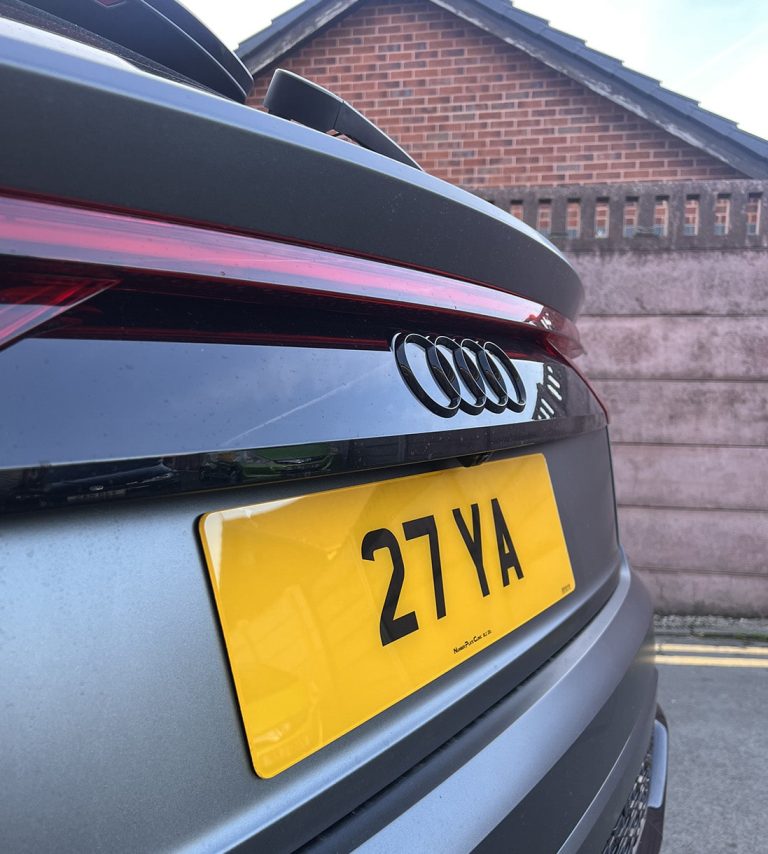

Motorcycle auctions can offer genuine value, but they move quickly and do not always give you time to think. The plate on the bike in front of you tells you a great deal about its history and its current legal standing, and this guide gives you the practical knowledge to carry out a meaningful plate check before you bid and the confidence to act on what you find.
When you buy a motorcycle at auction, you take on responsibility for its roadworthiness from the moment it is yours. That includes the number plate. If the plate fitted to the bike is non-compliant, incorrectly spaced, or does not match the vehicle’s registered details, riding it away is your problem and not the auction house’s.
A non-compliant plate can result in a penalty notice and a requirement to replace it immediately. More seriously, a registration that does not match the V5C logbook or shows signs of alteration can indicate a bike with a troubled history, including one that has been stolen and re-plated. Understanding what a road legal plate looks like and how to match it to the vehicle takes only a few minutes and can save you from a difficult situation after the gavel falls.
Our UK motorcycle number plate guide provides a full breakdown of the regulations, and it is worth familiarising yourself with the basics before auction day.
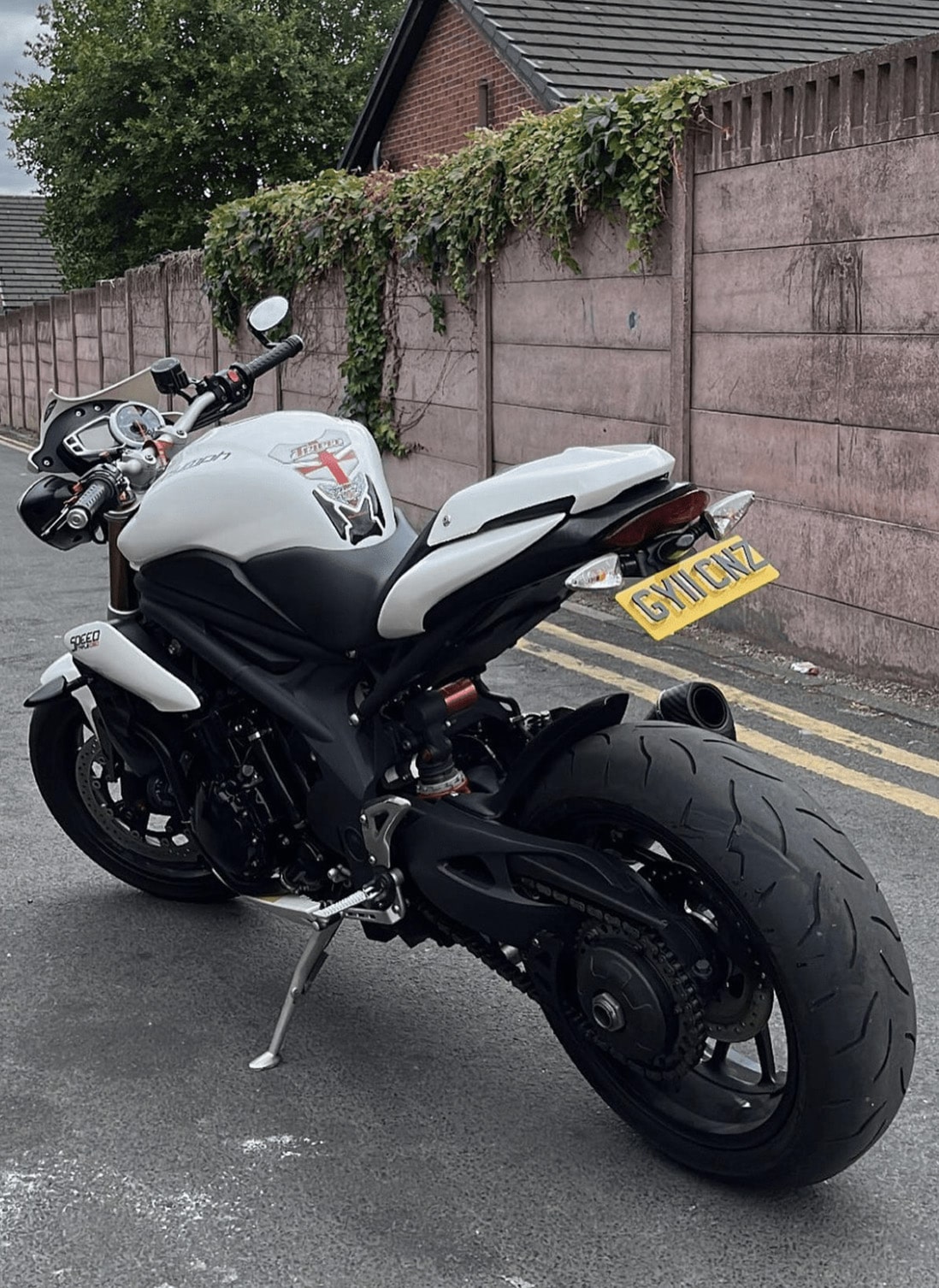
A road legal UK motorcycle number plate must meet the requirements of British Standard BS AU 145e. In practical terms, this means black characters on a white reflective background, using the Charles Wright 2001 font at the correct dimensions. Characters must be 79mm tall and 50mm wide (except the digit 1 and the letter I), with consistent spacing throughout.
The plate must also display the name and postcode of the registered number plate supplier who produced it. This detail is easy to miss but important: a plate without supplier details is not legally produced, regardless of how it looks at first glance.
Common non-compliant features to spot at auction include:
If the bike has a 3D gel or 4D laser cut plate, the same rules apply. Raised characters are road legal when the underlying dimensions and font remain within specification. Our guide to fitting 3D and 4D gel plates on motorcycles explains what compliant raised character plates look like and what separates them from non-compliant versions.
At auction, the V5C logbook is the primary document that ties a registration to a specific vehicle. If the auction listing includes a V5C, the registration shown on that document must exactly match the registration displayed on the plate. Any discrepancy is a significant red flag.
Check the following against the V5C:
A VIN check is one of the most reliable ways to confirm a motorcycle is what it claims to be. The VIN is usually stamped into the headstock of the frame and sometimes additionally on the engine casing. If the VIN on the bike and the VIN on the V5C do not match, the bike may have been re-plated or have had its identity altered, and bidding on it carries serious risk.
If no V5C is present, proceed with considerable caution. Buying a motorcycle without a logbook is not illegal, but it does complicate re-registration and is a common feature of vehicles with undisclosed histories.
Many auction lots are listed online ahead of the sale, giving you an opportunity to run checks before you arrive in person. The DVLA’s free online vehicle enquiry service allows you to confirm that the registration is recorded against a vehicle of the correct make, colour, and age. If the plate on the bike does not return results consistent with the vehicle you are looking at, that is worth investigating further before bidding.
Paid vehicle history services provide additional detail, including whether the vehicle has been recorded as stolen, written off, or has outstanding finance against it. While these checks are not infallible, they provide a useful layer of confidence when buying a motorcycle you know little about.
For a thorough overview of what the regulations require from motorcycle plates, our post on key legal requirements for motorcycle number plates in the UK is a reliable reference, and our motorcycle number plate laws FAQ covers the most common compliance questions in plain English.
Some auction bikes carry private registrations. These are entirely legitimate in themselves, but they add a step to your checks. Confirm that the private registration is correctly assigned to the vehicle on the V5C, and that no retention certificate is outstanding that would imply the registration has already been removed from the vehicle.
A retention certificate in the lot paperwork means the previous owner has applied to take the private reg with them and the bike is pending re-assignment of its original DVLA number. Buying a bike in this situation means you may receive a different registration once the process completes, which affects the plate you will need to order. Our guide to private number plates for motorcycles explains how the transfer and retention process works.
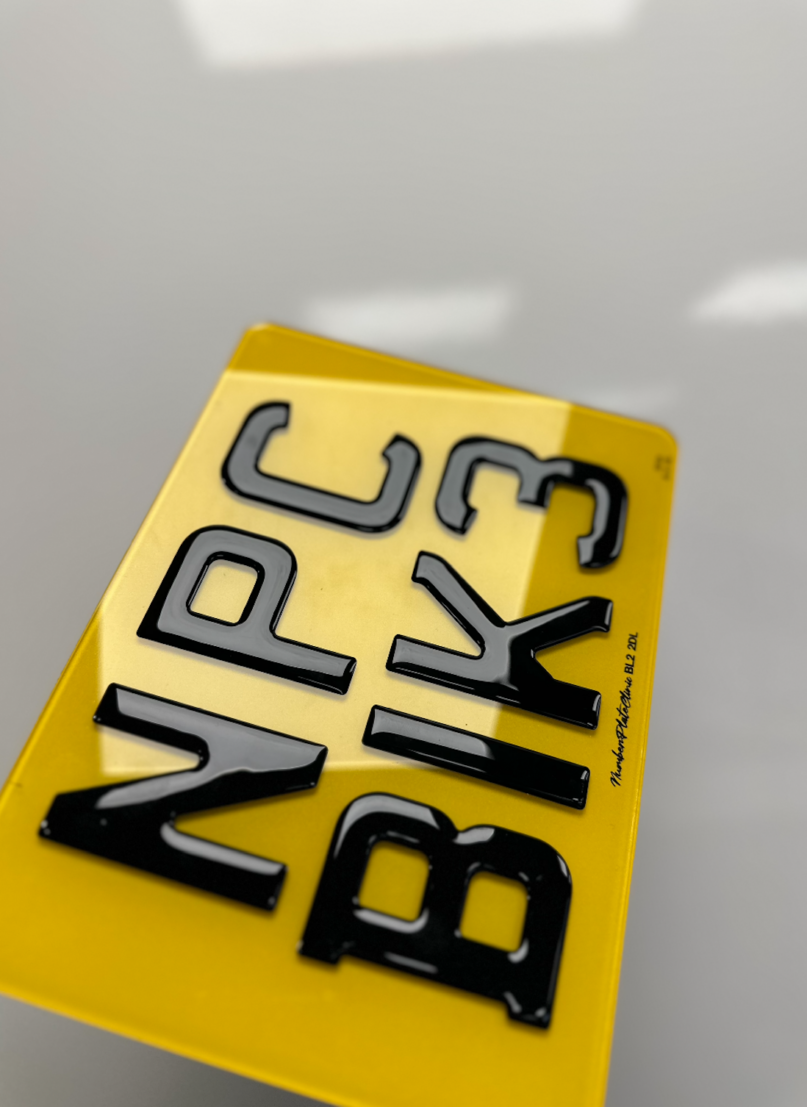
If you buy a motorcycle at auction and discover the plate is non-compliant once you get it home, replacing it promptly is the straightforward solution. You will need your V5C as proof of entitlement, and your new plate will be produced to your registration and dispatched quickly.
At Number Plate Clinic, we supply road legal motorcycle plates in both standard oblong and square formats, with flat, 3D gel, and 4D options available. Every plate is produced to BS AU 145e and supplied with our registered supplier details as required by law. If the bike you have bought would suit a different format or finish, our complete guide to buying motorbike number plates covers your options in full.
For a current overview of legal plate sizes and what each format involves, our post on motorcycle number plate sizes covers the dimension rules clearly.
Buying at auction can be an excellent way to find a motorcycle, and a plate check does not need to slow you down. The essentials take only a few minutes: look at the plate itself for obvious compliance issues, match the registration to the V5C, check the VIN, and run a quick online check if the listing is available in advance. If everything lines up, you are in a strong position to bid with confidence.
If the plate needs replacing after purchase, our full motorcycle plate range is ready to order with fast delivery across the UK. Browse our bike plates to find the right option for your bike, or get in touch with us if you have questions about your specific registration or format requirements.