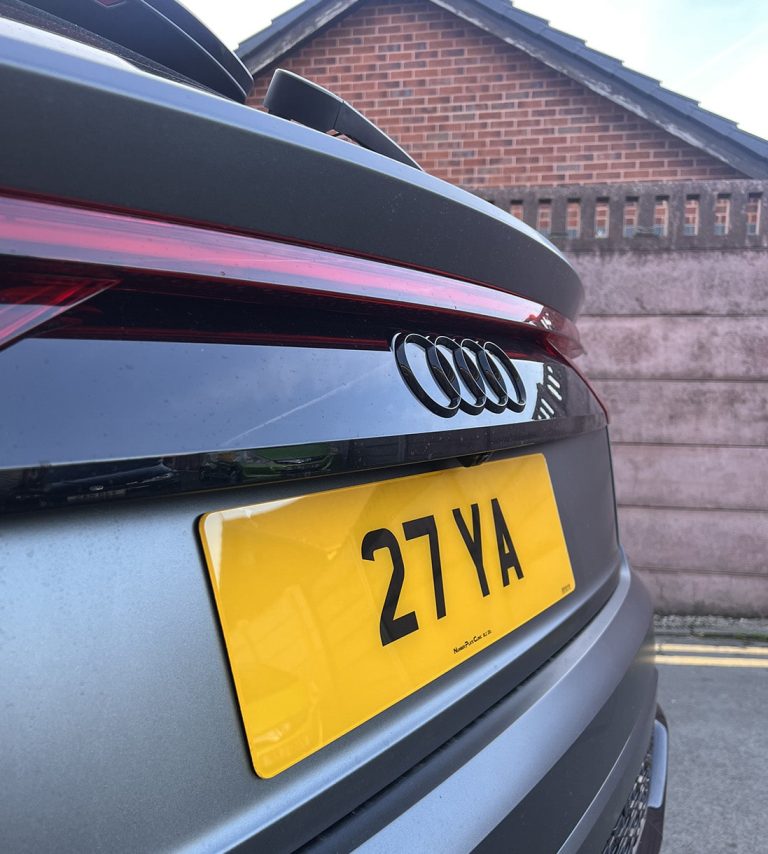

The number plate is one of the simplest things to check before your motorcycle goes in for its MOT, yet it is one of the more common reasons a bike picks up an advisory or an outright failure. A five-minute inspection at home before test day can save you the cost and inconvenience of a retest, and it leaves you confident that at least this part of the check is already sorted. Here is exactly what to look for.
MOT testers follow the DVSA inspection manual, which sets out specific criteria for number plates as part of the roadworthiness assessment. The checks cover both the physical condition of the plate and whether it meets the legal requirements for display.
In practical terms, a tester will look at whether the plate is present and securely mounted, whether the registration is fully legible, and whether the plate conforms to British Standard BS AU 145e. That standard covers the font, character dimensions, background colour, reflectivity, and the presence of the registered supplier’s details on the face of the plate.
A plate that passes all of these checks adds nothing to your MOT bill. A plate that fails on any one of them means either an advisory note on your certificate or a reason for failure that requires attention before the test can be passed. Our UK motorcycle number plate guide sets out the regulations in full if you want the detail behind each requirement.
The registration must be displayed in black characters on a white reflective background using the Charles Wright 2001 font. Characters must be 79mm tall and 50mm wide (except the digit 1 and the letter I), with a 14mm stroke width, 11mm spacing between characters, and 33mm between character groups. Margins must be at least 11mm on all sides.
The plate must also carry the name and postcode of the registered number plate supplier. If that information is absent or no longer legible, the plate does not meet the standard regardless of how the registration itself looks.
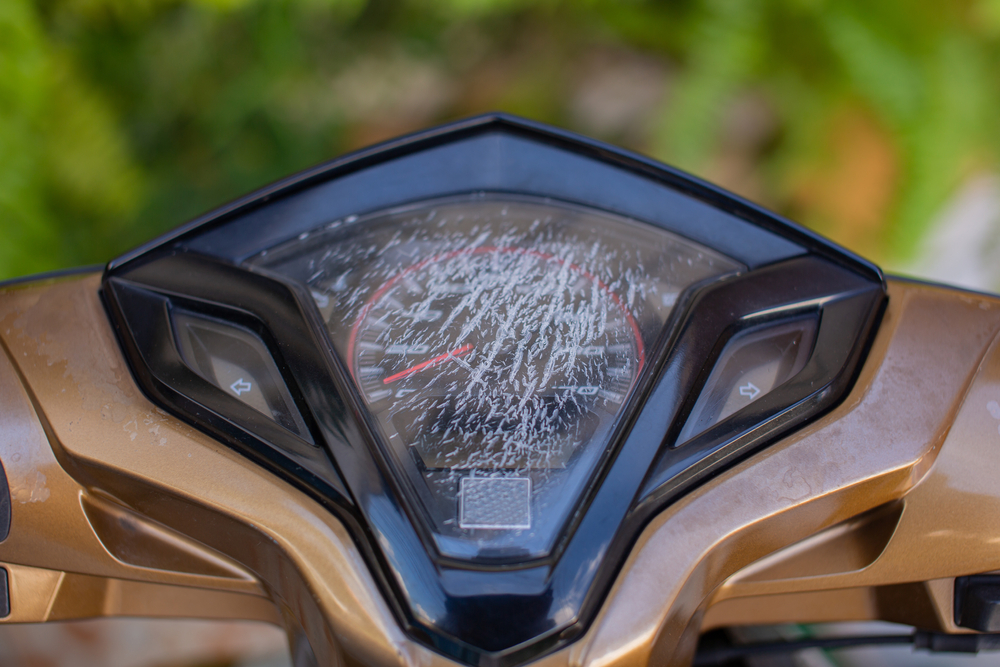
Understanding what fails helps you spot issues before the tester does. The most frequent plate-related reasons for an MOT failure or advisory fall into a small number of categories.
Physical condition is the most straightforward. A plate that is cracked, yellowed with age, so faded that the characters are difficult to read, or physically damaged in any way will fail the legibility check. UV exposure over time causes white reflective backgrounds to yellow and can cause the black characters to fade. If your plate looks noticeably dull or discoloured, it is worth replacing before your test.
Incorrect spacing is another consistent failure point. Adjusting the gaps between characters to imply a name or word is a well-known modification, but it is specifically prohibited under the regulations. MOT testers are trained to spot it. The spacing between characters must be exactly 11mm, and the gap between the two character groups must be exactly 33mm. Any deliberate deviation from these measurements is a failure reason.
Non-standard fonts produce failures in the same way. The Charles Wright 2001 typeface is the only permitted font, and no stylistic alterations are allowed. Italicised, narrowed, or decorative characters fail on sight.
Missing or illegible supplier details are caught more often than riders expect. If you have had your plate for a long time and the supplier information printed at the bottom edge has worn away or become unreadable, the plate is no longer fully compliant. This is a straightforward fix with a new plate.
Poor mounting is a physical rather than regulatory issue but produces the same result. A plate that is loose, tilted at an angle that affects legibility, or obscured by bodywork, luggage, or a number plate frame that cuts into the characters will draw attention from a tester.
Running through this check the week before your MOT gives you time to order a replacement if one is needed, rather than discovering a problem on the day.
If any of these points raise a concern, address it before the test. A new plate from a registered supplier resolves most of these issues in one step. Our post on motorcycle number plate sizes and what is legal covers the dimension requirements in detail if you want to check specific measurements.
Yes, provided they are produced to the correct specification. Raised character plates using 3D gel or 4D laser cut acrylic are road legal and MOT compliant when the underlying character dimensions remain within the BS AU 145e standard. The raised finish itself is not an issue for a tester. What matters is that the font, dimensions, and background all conform to the requirements.
Where 3D and 4D plates sometimes cause problems is when they have been produced as show plates rather than road legal items. Show plates may use oversized characters, non-standard fonts, or coloured backgrounds. If either of these descriptions matches a plate currently fitted to your bike, it will not pass an MOT and should be replaced before you book in.
Our guides to 3D gel plates on motorcycles and 4D plates for motorcycles explain what makes raised character plates road legal, and our post on fitting 3D and 4D plates to a motorcycle covers the compliance requirements in detail.

An MOT failure on the number plate is one of the more straightforward failures to resolve. You need a correctly produced replacement plate from a registered number plate supplier, with your registration displayed to the correct specification. Once the new plate is fitted and the tester confirms it meets the standard, your bike can continue through the rest of the assessment or proceed to a retest if other items were also flagged.
The process is simple: provide your V5C as proof of entitlement, choose your plate size and finish, and place your order. At Number Plate Clinic, plates are produced to BS AU 145e as standard and include our registered supplier details on every plate. Fast delivery means that even if you discover a problem close to your MOT date, you have a realistic chance of receiving a replacement before the appointment.
Our complete guide to buying motorbike number plates covers the ordering process in full, and our motorcycle plate FAQ answers the questions riders most commonly ask about compliance and replacement.
The number plate check in an MOT takes only a moment for the tester. Making sure it passes that check takes only slightly longer for you. Look at the condition, verify the font and spacing are correct, confirm the supplier details are legible, and make sure the plate is properly mounted. If anything does not look right, a replacement is straightforward and affordable.
Our full motorcycle plate range includes standard, 3D gel, and 4D options in both oblong and square formats, all ready to order online with fast UK delivery. Browse our bike plates to find the right replacement for your bike, or get in touch with us if you have a question before you order.