

If you are driving a foreign-registered vehicle in the UK, it is natural to wonder whether your number plates need to comply with British regulations. The answer depends on how long you plan to stay and how the vehicle is being used. This guide sets out exactly what the rules say, when compliance becomes necessary, and what switching to UK-compliant plates actually involves.
UK number plates are governed by strict legal standards, overseen by the DVLA and defined under the British Standard BS AU 145e. These regulations cover everything from character size and font to plate colour and the materials used in manufacture.
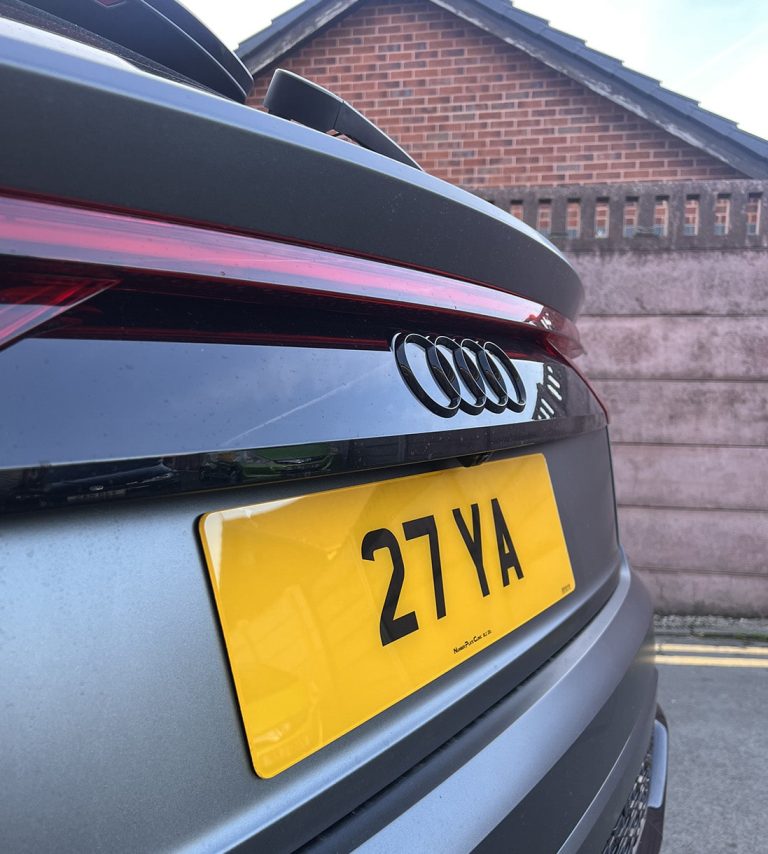
Front plates must be white with black characters. Rear plates must be yellow with black characters. Reflective materials are required across both to maintain visibility in low light and adverse weather conditions. The specific Charles Wright font is mandatory, and character sizing, spacing, and positioning are all set out in precise detail.
These requirements are not purely aesthetic. They exist to support ANPR (Automatic Number Plate Recognition) systems used by police, local authorities, and road enforcement agencies. A plate that sits outside these standards creates real identification problems, which is why compliance matters whether the vehicle is UK-registered or not. If you want to understand what else can fall foul of a vehicle check, our guide to why number plates fail an MOT covers the most common issues in straightforward detail.
In most cases, yes. Visitors driving a foreign-registered vehicle in the UK are generally permitted to use their home country plates for up to six months without any changes. This applies to tourists, short-term visitors, and people temporarily working in the country.
The key condition is that the vehicle must remain registered in its country of origin, and the driver must be considered a visitor rather than a UK resident. If you have relocated permanently or semi-permanently and brought your vehicle with you, the picture changes once that six-month window has passed.
Some countries also have bilateral agreements with the UK that affect how these rules apply in practice. If your vehicle is from an EU member state, post-Brexit rules now apply, and it is always worth checking the most current guidance from the DVLA directly rather than relying on information that may be out of date.
Once a foreign vehicle has been in the UK for more than six months, or once the driver becomes a UK resident, the vehicle will generally need to be registered with the DVLA. That registration process brings with it a requirement to obtain UK-compliant number plates.
This is particularly relevant for anyone who has moved to the UK from abroad and intends to keep driving their existing vehicle. Even if the car is in good mechanical condition, it cannot legally be used on UK roads on a long-term basis until it meets British standards, and that includes the plates themselves.
When the time comes to get compliant plates made, they must be sourced from a registered supplier and manufactured to regulation. At Number Plate Clinic, every plate is produced to BS AU 145e and is fully DVLA compliant. Whether you need a clean, everyday 2D printed plate or something with a more distinctive finish such as a 3D gel plate, everything we supply is built to the correct standard.
There is no room for guesswork when it comes to the legal requirements for a road-legal UK number plate. Here is a clear summary of what must be present:
These are minimum legal requirements, not optional features. Any plate that does not meet all of these criteria is not road legal, regardless of where the vehicle was originally registered. For a fuller explanation of what the regulations cover and why each element exists, our breakdown of MOT regulations for number plates is a useful reference.
Driving with plates that do not meet UK standards carries real consequences. It is worth understanding what is at stake before assuming your current plates will be fine:
The insurance implications deserve particular attention. If you are involved in an accident and your plates are found to be non-compliant, your insurer may use that as grounds to challenge your claim. Our post on the impact of illegal plates on insurance explains this clearly and is worth reading before making any decisions about your plates.
It is also worth noting that physical condition matters as much as legal format. If your plates are faded, cracked, or difficult to read, you can face the same legal exposure as someone displaying the wrong format entirely. Our guide to faded number plates and UK legal requirements explains where the line sits and how to stay on the right side of it.
If you have made the decision to register your foreign vehicle in the UK, the process involves contacting the DVLA and submitting the required documentation. This typically includes proof of ownership, proof of identity, and technical details about the vehicle. Once registration is complete, you will be issued a UK registration mark, which is the starting point for getting your plates made.
From that point, the plates themselves are straightforward to obtain. You will need to provide proof of entitlement to the registration, which any reputable registered supplier will ask for before producing the plates. This is a legal requirement and exists to prevent fraudulent plate production.
If you have questions about the different plate formats available and which is right for your vehicle, we are happy to help. You can get in touch with us directly and we will walk you through the options. For vehicles with specific fitment requirements, we also supply square format plates and motorcycle and bike plates alongside the full range of standard sizes.
Can I drive in the UK with European plates?
Yes, for short visits this is permitted. Vehicles from EU countries can be driven in the UK for up to six months before DVLA registration becomes necessary. Beyond that point, UK-compliant plates are required.
Do foreign vehicles need to display a UK identifier?
UK-registered vehicles are required to display a UK identifier when travelling abroad. For foreign vehicles driving in the UK, your home country identifier should be visible on the plate or as a separate sticker, depending on your country of origin and any agreements in place.
What happens if I drive without a compliant front plate?
A missing or non-compliant front plate is treated as a registration offence and carries a potential fine. Our dedicated post on what happens if you drive without a front number plate sets out the legal position in full.
Can I use show plates as a temporary measure while I wait for UK plates?
No. Show plates are not road legal and cannot be used on any vehicle driven on public roads. They are designed for display purposes only, such as at shows or events, and do not meet the requirements for road use.
Do I need to tell my insurer when I switch to UK plates?
Yes. Any change to your vehicle’s registration details should be reported to your insurer promptly. Failing to keep your policy up to date could affect the validity of your cover.
Making the switch to UK-compliant plates is a straightforward process once you have your registration in place. Number Plate Clinic supplies made-to-regulation plates for all vehicle types and registrations, with every plate manufactured to BS AU 145e and produced by a registered supplier.
If you are ready to order or simply want to understand your options, you can browse our full range online or get in touch with us for guidance. We are here to make compliance simple, not stressful, and to make sure you are driving with plates you can rely on.

We use cookies to improve your experience and run personalised ads. You can accept or manage your preferences.