


[vc_row][vc_column][vc_column_text]Can ANPR detect 4D plates UK? Are there any rules you need to know about? Read this article to learn everything you need to know about it.
Number plates play an important role in today’s world, and have since 1903 when they were first introduced to the UK under the Motor Car Act. Since then, our plates have evolved in all kinds of ways, and some of them might leave you wondering, can ANPR detect 4D plates UK? Would 4D plates have been legalised in 2021 if they couldn’t be picked up?
These are all questions that we will answer in the sections below. We will tell you everything you need to know about 4D number plates and ANPR, but don’t stop there. If you want to find out more about picking the perfect plate and fitting it, we have blogs that can help with that, too.
 ANPR, or Automatic Number Plate Recognition, is a camera scanning system that is widely used to scan vehicles and their number plates. When a car or another type of vehicle passes an ANPR camera, the camera picks up the registration number and checks it against the records kept in the database.
In the case where there is an issue, such as an uninsured driver, a driver on the phone, or an illegal or unrecognised number plate, the police can then stop the car and take the action they need to.
With ANPR, police can see:
Since these cameras are all around the country and on every main road, you need to make sure that your vehicle is within the law, and that you are doing everything right. Depending on what the ANPR camera picks up, you could be fined or even imprisoned.
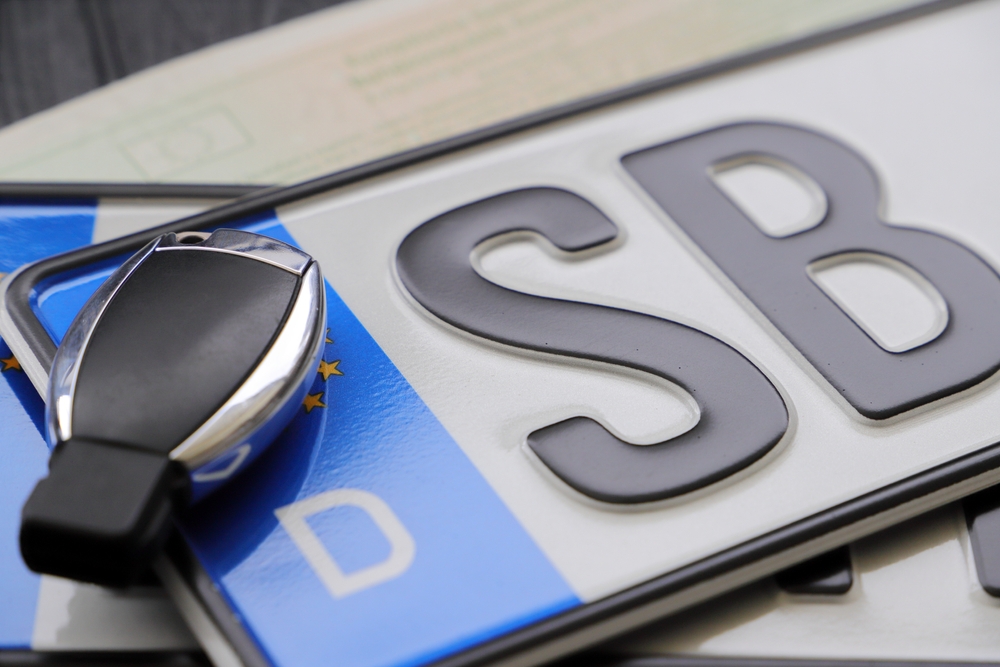 4D plates are a nice step up from the well-loved and popular 3D plates. These number plates stand directly out of the background instead of being flat. So, the characters would cast a shadow if you were to shine a light on them at any angle.
Typically laser cut with acrylic, 4D plates are three-dimensional and add some extra class to a vehicle’s overall look, which really pulls everything together for those more high-end car models. While their differences to 3D number plates might initially be minimal, once you spot it, you will always be able to tell, and you will look for them everywhere.
When it comes to 4D plates, you should know that they are visible to cameras, and they are made using folly DVLA-compliant and legal materials – provided you get them from a registered seller like us.
If you have a 4D plate, you should declare them when you do your vehicle insurance, as they count as a modification. Any plate other than the standard printed plate should count as a modification, so always keep this in mind when looking at dimensional plates.
 Yes, ANPR cameras can absolutely pick up 4D plates UK. In fact, 4D plates are even more visible to both cameras and the human eye, which makes them easier to identify. They are also great because it is more difficult for dirt and mud to obscure the characters on the plate, so there’s less of a risk of getting into trouble for not having visible plates.
In short – no. ANPR is a crucial part of the policing system in the UK, and any kind of number plates that can’t be read by these cameras are illegal. Since 4D plates were legalised in September 2021, there should be no issue when it comes to using 4D plates.
With that being said, any type of number plate can be illegal if it doesn’t follow all the rules and regulations. If you are looking for a shop that you can count on, Number Plate Clinic is the best alternative to Halfords, and we have number plates you can trust.
The reason why the UK is so strict on all the rules they put forward when it comes to number plates is all due to identification. In other words, every number plate has to have all the same measurements so that cameras and ANPR can see them.
Not only that, but by using all the same measurements and layouts (which we will go through below), the human eye will also easily be able to identify plate numbers, which can be crucial for safety and evidence in cases.
For spacing, these rules need to be followed:
Number plates must be made from a material that’s reflective and display black lettering or characters in the Charles Wright 2001 font. The rear plate must be yellow, while the front is white, and there can be no background patterns. All plates fitted after September 2001 must be marked with a British Standard Number, and must show the plate supplier.
All plates must be registered with the DVLA and bought from a registered supplier (like us). You are not permitted to reuse plates or reuse character combinations from other plates, and everything on the plate must be properly spaced, or else it will be deemed illegal.
Your number plate needs to be visible both off the road and on the road, too. This means that you need to clean the plate when necessary so that characters are not obscured.
You are not allowed to tamper with plates in any way, including cutting it down, changing the colours, fonts, characters, or adding non-standard designs or symbols to the plate. Electric vehicles are allowed to have a green plate to signify this and set them apart from other cars.
 At Number Plate Clinic, we want you to get your number plates hassle-free and drive around without worrying about the legality of it. We offer a range of 2D, 3D & 4D (sometimes called 5D) plates in our shop, and we can dispatch them on the same day if you order before 2pm.
As a DVLA compliant shop, we only offer number plates of the highest quality and make sure that they are fit for road use in every way. So, if you were worried about 4D or 3D plates not being legal, you can put those fears to rest and get a legal, road-compliant pair to finish off your vehicle.
Read through our terms and conditions, privacy policy and refund policy before making a purchase. You can also learn about our workshop and affiliate program, or find out more by speaking with our customer service if you want to purchase high-quality, DVLA-compliant number plates
We cover a range of number plate-related topics in our blogs, too, from the most expensive private UK number plate to be sold to all the new private plate laws coming into effect in 2024.
Now that you have an answer to ‘can ANPR detect 4D plates UK’, you can drive with your fancy plates guilt-free. Just remember – if a DVLA compliant shop like us sells 4D plates, they are legal – even if some officers aren’t actually aware of the updated laws yet.[/vc_column_text][/vc_column][/vc_row]