

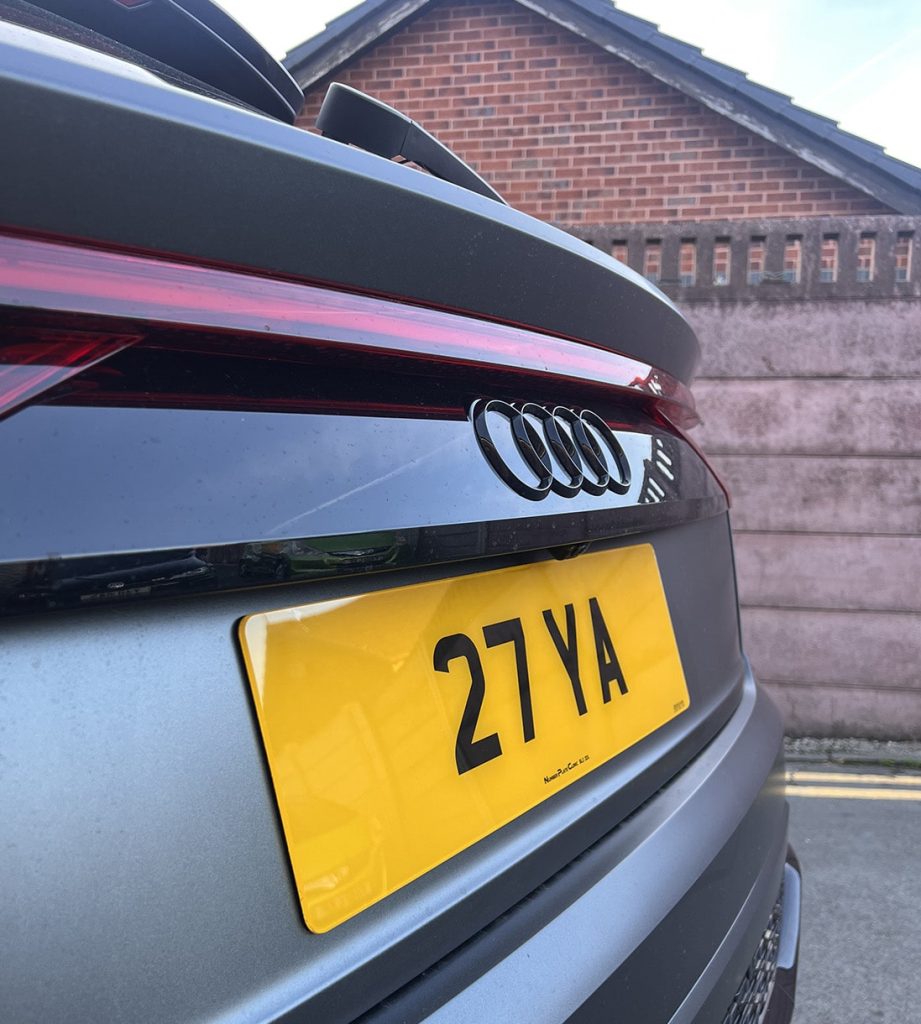
If you’ve been looking at ways to give your vehicle a cleaner, more streamlined appearance, you might have wondered whether fitting a smaller 2D number plate is an option. Perhaps your car has a tight bumper space, or you simply prefer the sleek look of a more compact plate. The short answer is: it depends. While UK law sets strict dimensions for road-legal number plates, certain vehicles qualify for exceptions—and understanding those rules can help you make the right choice without risking fines or MOT failures.
In this guide, we’ll walk you through the legal position on smaller number plates in the UK, explain when exceptions apply, and show you how to stay compliant while achieving the look you want. Whether you drive a modern hatchback, a classic car, or a motorcycle, we’ll help you understand your options.

Before we look at sizing rules, let’s quickly clarify what we mean by 2D number plates. These are flat, printed plates where the characters are created using specialist inks rather than raised acrylic letters. The result is a crisp, modern finish that’s becoming increasingly popular with UK motorists.
Unlike 3D gel plates (which feature raised, tactile characters), 2D plates offer a lightweight, durable option that’s easy to fit and maintain. They meet British Standard requirements when manufactured correctly, and they’re suitable for everyday road use. To learn more about how they compare to other styles, see our detailed explanation on 2D plates.
Under current DVLA regulations, road-legal number plates in the UK must meet specific size requirements:
These dimensions ensure that number plates are clearly readable by traffic cameras, police officers, and other road users at a distance. The measurements apply equally to both 2D and 3D plates—the finish style doesn’t change the legal dimensions.
For most cars and vans, you cannot legally fit a plate smaller than these standard sizes. Doing so puts you at risk of enforcement action, MOT failure, and potentially invalidating your insurance in the event of an incident.
Here’s where the exceptions come in. UK law does allow smaller number plates—but only in specific circumstances:
Motorcycles and Mopeds
Two-wheeled vehicles have different requirements. Motorcycle number plates can be smaller because of limited mounting space. The permitted dimensions are:
If you ride a motorbike or scooter, you can legally use a more compact 2D plate that meets these motorcycle-specific measurements.
Imported Vehicles and Square Plates
Some imported vehicles—particularly those from Europe or Japan—arrive in the UK with smaller rear bumper recesses designed for square or non-standard plate shapes. In rare cases, vehicle owners have successfully applied to DVLA for permission to use a smaller or square plate, such as a hex Lambo-style number plate, but approval is not guaranteed.
The DVLA may grant an exemption if you can demonstrate that fitting a standard-size plate is genuinely not possible without modification to the vehicle structure. You’ll need photographic evidence and, in some cases, confirmation from the vehicle manufacturer. Even then, any smaller plate must still display characters at the legally required size and spacing—it’s the overall plate dimensions that may be reduced.
Classic and Historic Vehicles
Vehicles registered before 1 January 1973 are exempt from displaying a front number plate, though they must still show a rear plate. However, the rear plate must still meet current size and spacing regulations unless the vehicle qualifies for a historic exemption and you can prove the original plate configuration.
In practice, very few classic cars are allowed truly smaller plates—most must use standard dimensions. If you own a vintage or cherished vehicle and want a neater look, it’s worth seeking specialist advice before ordering.
Fitting an undersized number plate—even a high-quality 2D printed version—can create serious problems:
Even if a smaller plate looks smarter or fits your bumper more neatly, the legal and practical risks usually outweigh the aesthetic benefit—unless you genuinely qualify for an exemption.
You may have seen references to short number plates, which are designed for vehicles with narrower bumper spaces or for registrations with fewer characters. These plates are shorter in width (because they have fewer letters or numbers), but they still maintain the legally required height and character dimensions.
A short plate is not the same as a smaller plate. It’s a standard-height plate that happens to be less wide because your registration mark contains fewer characters. For example, a plate displaying “A1” will naturally be narrower than one showing “AB12 CDE”—but the height, character size, and spacing remain compliant.
Short plates are perfectly legal as long as they meet all other British Standard requirements. If you have a cherished or dateless registration with fewer characters, a short plate can give you a neater appearance without breaking the rules.
If you want the modern look of a 2D plate and need to stay within the law, here’s a simple compliance checklist:
When you search for your registration and place an order through our shop, we automatically apply the correct dimensions for your vehicle. If you have any questions about sizing, spacing, or specialist requirements, our team is here to help—just get in touch.
Mistakes happen. Perhaps you ordered a plate online without realising the dimensions were wrong, or you fitted an old plate from a previous vehicle that doesn’t meet current standards. If you’ve discovered your plate is undersized or otherwise non-compliant, the best course of action is to replace it as soon as possible.
Continuing to drive with an illegal plate increases your risk of penalties, and it won’t become legal simply by hoping it goes unnoticed. Replacing a plate is straightforward and affordable—far less costly than a fine or MOT failure. We can produce a compliant 2D printed number plate and deliver it quickly, so you’re back on the road with peace of mind.
For general advice on plate care and maintenance, you might also find our guide on what to do if your number plate falls off useful.
Can I fit a smaller 2D plate if it still displays all the characters clearly?
No. Even if every character is readable, UK law specifies exact dimensions for both the overall plate and the individual letters and numbers. Clarity alone doesn’t make an undersized plate legal.
Do 2D plates have different size rules compared to 3D plates?
No. The legal dimensions are identical regardless of whether your plate is 2D (flat printed) or 3D (raised characters). The styling method doesn’t change the compliance requirements.
I’ve seen smaller plates on expensive cars—are they legal?
Not usually. Some drivers fit non-compliant plates and accept the risk of fines or MOT issues. Others may have secured a rare DVLA exemption for an imported or specialist vehicle. It’s always worth checking rather than assuming.
Can I use a show plate on the road if it’s the right size?
No. Show plates are decorative items intended for private display, exhibitions, or off-road use only. Even if they match legal dimensions, they typically lack the required British Standard markings, approved materials, or supplier details, which makes them unsuitable for road use.

If you want to personalise your vehicle while staying compliant, there are plenty of legal options beyond plate sizing. Consider exploring our range of number plate accessories, including frames, covers, and fixings that add a touch of style without compromising legality.
Remember: the goal is to enhance your vehicle’s appearance while respecting the rules that keep everyone safe on the road.
So, can you have a smaller 2D number plate in the UK? For most car and van drivers, the answer is no—standard dimensions are a legal requirement designed to ensure road safety and effective enforcement. However, if you ride a motorcycle, own an imported vehicle with genuine fitment constraints, or have a registration with fewer characters, you may be able to use a shorter or specially approved plate.
The key is to understand the rules, verify your eligibility, and always order from a registered supplier who checks compliance before manufacture. At Number Plate Clinic, we make that process simple. Every plate we produce is built to regulation, crafted from approved materials, and designed to last.
If you’re unsure which size or style is right for your vehicle, don’t hesitate to contact us. We’re here to help you get it right the first time—so you can enjoy a great-looking, road-legal number plate with complete confidence.
Extra 10% OFF on Sale Product
Use Code ‘Blog10’