
[vc_row][vc_column][vc_column_text]Curious about 4D plates and cameras? Read this to learn the science behind 4D plates and their interaction with speed cameras
Speed cameras play a key role in law enforcement across the UK and the rest of the globe, but what is the science behind 4D plates and their interaction with speed cameras? With 4D plates continuously growing more popular, a lot of people are left wondering how these plates work with speed cameras, and maybe even ANPR and ULEZ cameras.
If you want to find out the truth, then we are going to cover everything you need to know in this article.

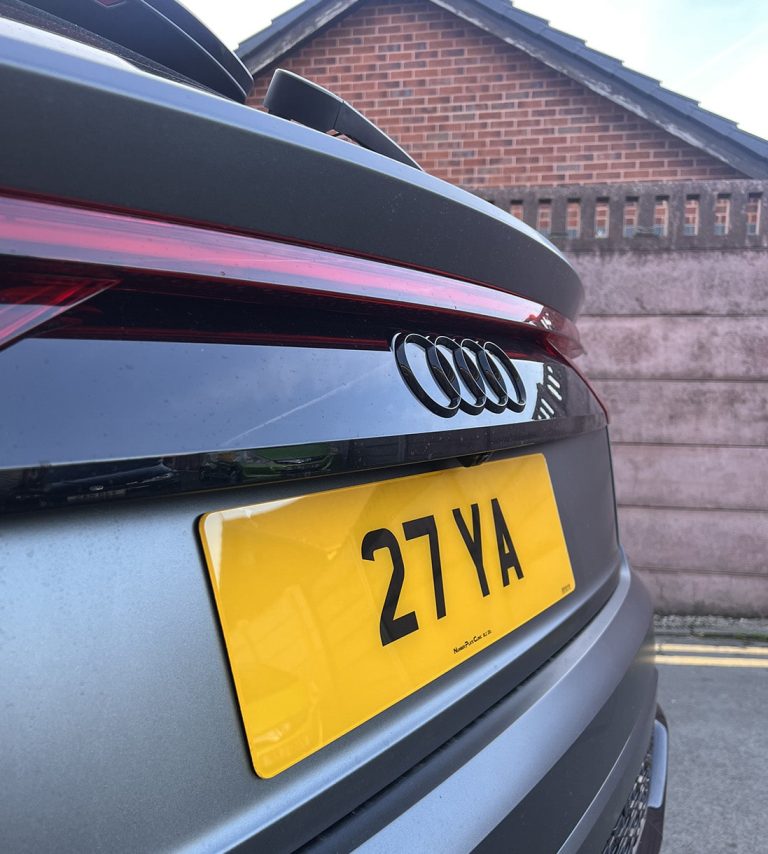
4D plates are laser cut and three-dimensional (not four-dimensional, sorry), meaning that the characters on the plate are raised from the background. This results in a shadow being cast when light hits the plate.
They have gained a lot of popularity over recent years since becoming road legal, and continue to take the country by storm. With nothing to suggest that they will become illegal, they are one of the best alternatives to traditional number plates and are a fantastic option for high-end vehicles, or if you just want to enhance your car’s overall look.
There are lots of reasons for why you would want to upgrade to 4D plates – they are stylish, modern, and visible to all cameras, including ULEZ and ANPR. What’s more, you won’t fail your MOT because of them, but you should definitely declare them for insurance, since they are considered a modification.
With recent changes to the law and regulations, 4D plates are not perfectly legal, so you have nothing to worry about. As long as you get your plates from a DVLA-compliant shop like us, you are in good hands.

The first of these cameras was installed in 1992 over Twickenham Bridge and was a Gatso device with the trigger speed set to 60 mph. Just three weeks after being turned on, over 20,000 motorists were caught going over 65 mph – so it was a success!
In short, speed cameras work by using radar technology or detectors in the road to record how fast a vehicle is moving. While older speed cameras used to use film, the modern ones are completely digitised and more advanced.
These cameras are all about maths, and will compare two images taken of a travelling vehicle. It will look at the distance travelled, usually shown by the markings on the road, and the time it took for the vehicle to get from point A to point B, and calculate its speed based on that.
However, not all speed cameras work like that. There are some that will track your car over several miles to find the average speed limit, too – so it’s always best to be cautious when driving, whether you think there is a speed camera set up or not.
These cameras will record the speed, as well as the car’s registration, the time of speeding, and the road’s speed limit. Some cameras will also include a picture of the driver and front passenger, but this doesn’t mean that there will be a flash to let you know this has happened. Modern technology means that you could get a letter in the post without ever knowing you speeded!
There are several different speed camera types, and you have probably come across all of them over the years. Some are more obvious than others, and the law states that speed cameras need to be painted yellow by 2016.
The three main types of speed cameras are:
The standard speed camera that we commonly see on the roads will only measure a handful of things:
These cameras will not typically flag up other information, but there are other cameras that will – so make sure you are on the right side of the law. With recent advancements, ultra speed cameras are capable of reading far more than just the speed and registration of a vehicle.
ANPR, or Automatic Number Plate Recognition, is a camera scanning system that is widely used to scan vehicles and their number plates. When a car or another type of vehicle passes an ANPR camera, the camera picks up the registration number and checks it against the records kept in the database.
In the case where there is an issue, such as an uninsured driver, a driver on the phone, or an illegal or unrecognised number plate, the police can then stop the car and take the action they need to.
With ANPR, police can see:
So, speed cameras and ANPR look at different things, but there is some overlap in what both cameras identify.

The bold, raised characters on legal 4D plates are easy for cameras to scan and read, which means that speed cameras, ANPR, and ULEZ cameras can track these vehicles without a problem. Whether you opt for 3 mm or 5 mm 4D plates, and they are regularly shaped or hex plates, you have nothing to worry about.
With that being said, it’s important to mention that carbon gel plates and cut-down plates are illegal on UK roads. So, if you are spotted with either of these, which speed cameras may be able to pick up, you can expect a fine. For your safety and peace of mind, we suggest staying up-to-date with private plate laws in 2024 and always know what is coming around the corner.
As we already said, 4D plates will not avoid speed cameras or any other kind of traffic cameras. So, if you were hoping to avoid detection on the roads, you are out of luck.
With 4D plates legal as long as they follow all the rules and regulations set out by the UK government, your plates will be visible to all cameras and able to be scanned to help with law enforcement and safety. Since the trends and predictions for 4D plates only suggest that they will remain popular until something new and improved comes along, it makes sense for this to be the case.

At Number Plate Clinic, we like to keep you posted on everything you should know in the number plate world. From news posts about 4D plates replacing carbon gel plates to why there is no Z in number plates, you might find something useful in our collection.
As the best alternative to Halfords for all your number plate needs, we also want to give you the tools to do some of the work yourself – like how to fit number plates (spoiler: it’s easier than you think) or even what to do if you have been fined for having 4D plates.
Now that you know the science behind 4D plates and their interaction with speed cameras, hopefully you feel more at-ease about trying out one of these modern and stylish plates. Not only are they attractive, but they help to set you and your vehicle apart from the rest and elevate any high-end car’s overall look – and who doesn’t want that?
[/vc_column_text][/vc_column][/vc_row]