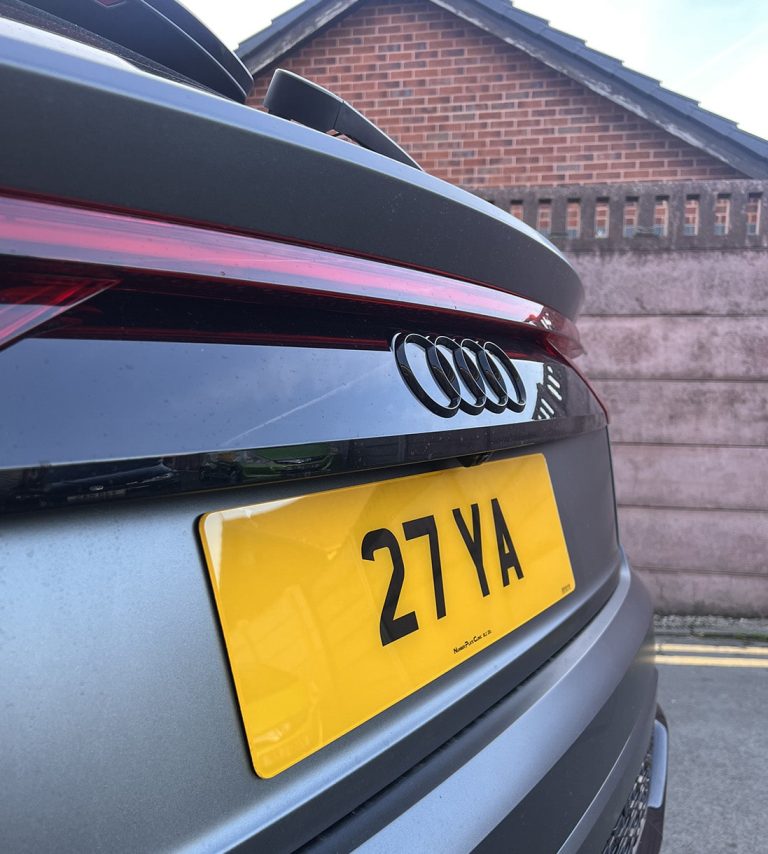

Number plate spacing might not be the first thing on your mind when you are thinking about your vehicle, but it is one of the most consistently enforced aspects of plate compliance in the UK. What many drivers treat as a minor cosmetic choice can amount to a clear breach of DVLA regulations, and it is something police and ANPR cameras are well equipped to identify.
This guide covers what the law requires, why spacing matters so much in practice, and how to keep your plates fully compliant without compromising on appearance.
UK number plates follow a precisely defined format set out by the DVLA. Every registration is structured in a specific way, with mandatory spacing between character groups. A standard plate such as AB12 CDE must retain that exact grouping. Moving characters closer together, repositioning them, or separating them differently to create a new meaning is a legal offence, regardless of how subtle the change appears.
The characters themselves must also conform to the Charles Wright font at the prescribed size, and the spacing between individual characters as well as between the two groups must meet specific millimetre measurements. These are not general guidelines open to interpretation. They are fixed legal requirements.
The reason the rules are so precise comes down to readability. Number plates need to be instantly legible by both officers on the road and the automated systems that check vehicles continuously across the UK. Once spacing is altered, that consistency breaks down, and the plate can no longer be relied upon to perform its identification function accurately.

Most spacing issues are deliberate rather than accidental. The most common reason is personalisation, where characters are regrouped to suggest a name or a word. Drivers may also make subtler aesthetic adjustments simply because they prefer the way an altered layout looks.
The difficulty is that what feels like a minor customisation is, in legal terms, a modification that changes how your registration reads. Even if the individual characters are correct, altering the grouping can make the plate appear to display a different registration entirely. That is where compliance becomes a more serious matter than many drivers realise before they are stopped.
Officers are trained to notice irregular number plates, and spacing inconsistencies are among the most visible issues to a practised eye. A plate that does not follow the standard grouping format stands out immediately, particularly for officers who are familiar with exactly how plates should look across the full range of current and historic registration formats.
A spacing irregularity alone is sufficient grounds for a stop. There is no requirement for any other traffic offence to be present. Once stopped, an officer will inspect the plate directly, check the registration against the vehicle, and take action based on what they find. In straightforward cases, the driver is issued a notice to replace the plate. Where the plate appears to have been deliberately altered to obscure or misrepresent the registration, the consequences can be more significant.
Alongside manual checks, ANPR cameras operate continuously on UK roads, scanning plates and running them against live databases in real time. These systems are calibrated to recognise standard plate formats, and spacing that falls outside the expected layout can cause the system to struggle with accurate character recognition.
When a plate cannot be read reliably, it may be flagged for review. A vehicle whose plate consistently fails to process correctly across multiple camera reads is likely to attract attention, even if the plate looks acceptable to the naked eye. ANPR does not give the benefit of the doubt in the way a person might. If the format does not match what the system expects, it registers as an anomaly.
Our breakdown of MOT regulations for number plates sets out in plain terms why consistent formatting underpins everything from roadside checks to automated enforcement.
The practical consequences of non-compliant spacing are worth understanding clearly before making any changes to your plates:
The insurance implications are often the most overlooked. An insurer can use a non-compliant plate as grounds to challenge a claim, and the consequences of that can be significant. Our post on the impact of illegal plates on insurance explains this in full and is worth reading if you have any doubt about your current plates.
If your plates have also caused an MOT failure and you want to understand the full range of reasons that can happen, our guide to why number plates fail an MOT test covers the most common issues in detail.
It is worth being clear that spacing requirements apply equally across all plate formats. The style and finish of a plate do not change the underlying legal requirements. Whether you drive with 2D printed plates, 3D gel plates, or 4D plates, the character grouping and spacing must meet the same standard.
The same applies to less conventional formats. Square plates follow a different physical layout but must still display the registration in the correct format. Hex lambo style plates offer a distinctive look while remaining subject to the same spacing rules. Motorcycle and bike registrations use a different layout to car plates, but the formatting requirements are equally fixed. You can find road-legal options in our motorcycle and bike plate range.
One category worth flagging separately is show plates. Show plates are produced for display purposes only and are not road legal. They must not be fitted to any vehicle driven on public roads, regardless of whether the spacing on them is technically correct. The plate itself does not carry the required British Standard markings for road use.
Personalisation through number plates is entirely possible within the rules. Private registrations are the correct route, and they allow you to display a specific combination that holds meaning to you without any need to alter spacing or formatting.
If you are considering a private plate and want to understand the associated costs and process, our guide to how much it costs to transfer a number plate is a useful starting point.
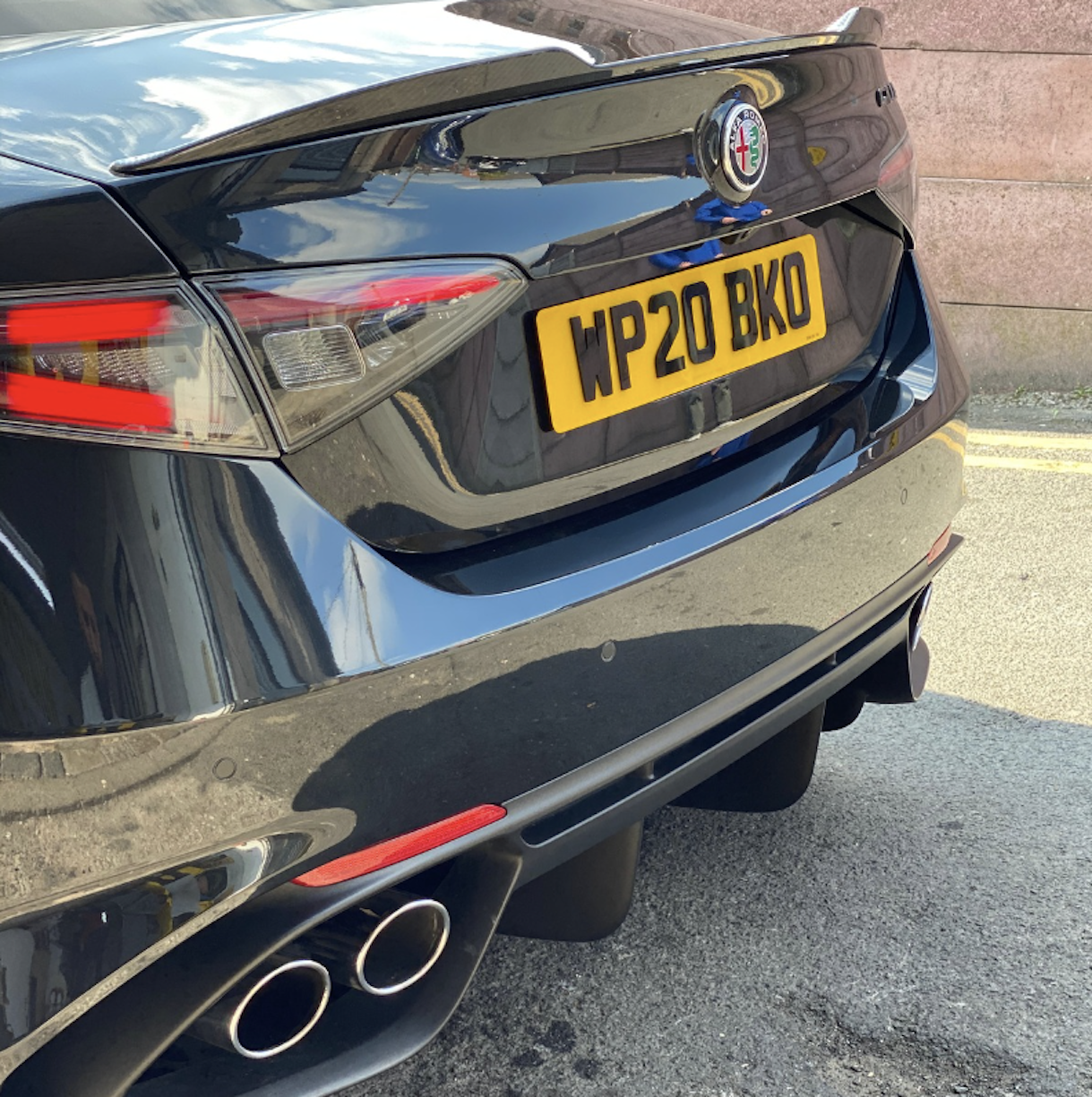
Spacing is frequently not the only issue on a non-compliant plate. A few related problems are worth being aware of, particularly on older or modified vehicles.
Faded or damaged plates that are difficult to read carry the same legal exposure as a plate with incorrect formatting. Our guide to faded number plates and UK legal requirements explains where the threshold sits. A missing front plate is a separate offence in its own right, and our post on what happens if you drive without a front number plate covers the legal position in full.
Finally, how a plate is physically mounted can also contribute to spacing issues developing over time. Using the right fittings keeps the plate secure and correctly aligned. Our number plate accessories range includes compatible fixings and surrounds designed for compliant fitment.
If your current plates have been altered, are showing signs of wear, or simply do not meet the current standard, replacing them is a straightforward step. Every plate supplied by Number Plate Clinic is manufactured to BS AU 145e, produced by a registered supplier, and formatted to the correct legal standard as standard.
If you have questions about which plate type suits your vehicle, or you want to confirm that a replacement will meet the requirements, get in touch with us and we will point you in the right direction. Getting your plates right is not complicated when you know what you are looking for.