
[vc_row][vc_column][vc_column_text]Number plates have been an essential requirement for vehicles in the UK since 1903 and have undergone several changes over the century since, including the introduction of the green number plate in December 2020.
But green number plates have raised many questions including what they’re for, whether they’re mandatory and how to get them. We’ll answer all of these questions in this blog.

The colour green has been associated with nature and the environment for time immemorial and has been closely connected with ecological movements such as Greenpeace and climate activism for at least the last 50 years. So it’s no surprise that green has been added to certain number plates to indicate that a vehicle is 100% electric and produces no direct emissions.
Green number plates aren’t fully green as the colour of number plates in the UK is strictly white at the front and yellow at the rear of the vehicle, however, new electric vehicles (EVs) have a small green strip at the start of the number plate to indicate they are all-electric.
The green number plate was introduced by the Transport Ministry at the end of 2020 in an effort to raise awareness of electric cars to other road users and promote them, as the government plans to prohibit sales of new petrol and diesel cars by 2035. This move is to help reduce emissions that are contributing to climate change as well as reduce certain cardiovascular and respiratory illnesses in the UK.
Supposedly, green number plates were also intended to make it easier to introduce incentives to drivers of electric vehicles, however, what these are and when they might come into effect are yet to be discussed in any detail.

All new electric vehicles will have green number plates as a new standard, including cars, motorbikes and vans. No additional paperwork will have to be completed to obtain a green number plate.
Just like standard modern number plates, the green number plate will have :
All vehicles registered between 1 September 2023 and 1 March 2024 will have “73” in the middle of the number plate, while those registered between 1 March and 1 September 2024 will have “24” in the middle.
Green number plates are only eligible for 100% electric vehicles, also known as all-electric vehicles. Hybrid vehicles still produce some emissions as they operate partly with an electric battery and partly with a petrol or diesel engine, so they cannot use a green number plate.
Use of a fraudulent number plate will result in a hefty fine, so ensure you have the right number plate on your vehicle. Hybrid vehicles have the same style of number plates as standard petrol/ diesel vehicles.

If you buy a new electric car you’ll automatically have a green number plate and don’t need to buy your own. However, if you have an electric car that was registered before 2021 or are buying an older EV, you can get a green number plate from an approved supplier. There are number plate manufacturers who aren’t on the government’s list of number plate suppliers, however, you may be at risk of buying a number plate that doesn’t meet all of the UK’s number plate regulations.
When you find your nearest green number plate supplier, you should provide your identification and vehicle’s logbook to prove that you have an electric car. Using a green plate on a non-electric or hybrid vehicle can result in a large fine of up to £1000.
Getting a green number plate for your electric vehicle is not mandatory, so if you don’t already have one, you don’t need to change it. However, if the government finally introduces perks for having a green number plate (such as free or reduced parking), it may be in your interest to get one.
The green strip on the number plate is located on the left of the plate, where some number plates have the “UK” marking for drivers using their cars abroad. So if you have a UK strip on your number plate, you can keep this rather than getting a new, green number plate if you’re using an electric car or planning to re-register your old number plate on your new vehicle.
If you do have a green number plate, you’ll need to get a UK sticker to place clearly on the rear of your vehicle if you drive abroad. The old GB stickers are no longer valid, as of 28 September 2021.
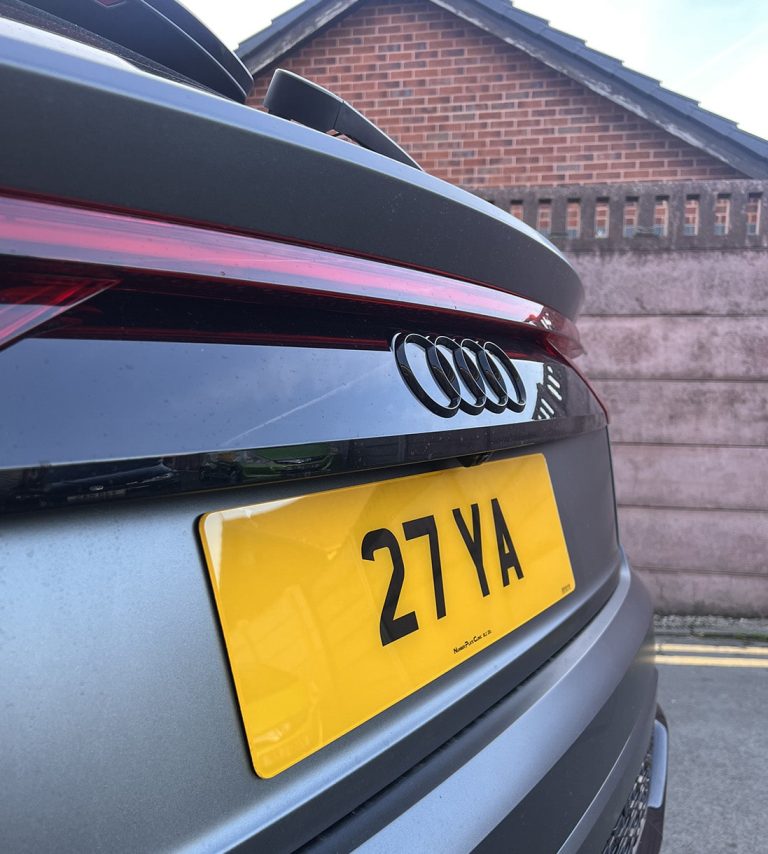
When getting a new green number plate, you may wonder if you can add a unique design or personalise your plates, such as changing the overall colour of the number plate. But since 1973, all vehicles registered after this date must have a white plate with black text on the front of the vehicle and a yellow plate with black text on the back. Any other colour plates are not permitted, although vehicles produced before 1973 may still have the original black with silver characters on both front and rear number plates.
The change was made to make it instantly clearer to all road users and pedestrians, which way the vehicle is facing to prevent accidents. Number plates should also be very easy to identify, so that in the event of an accident or issue on the road, other drivers, pedestrians and the police can identify the registration of the vehicle.
According to experts and supported by the DVLA, black text on a white background is the easiest combination of colours to read quickly, followed by black text on a yellow background, which is why these two colour combinations were chosen.

Since the purpose of a number plate is to be clear to any observers so they can identify the vehicle quickly and assess which direction it is moving in, there are several strict regulations each number plate must follow to be road-worthy. If your number plate does not meet the regulations, your vehicle will fail its MOT.
All UK number plates (except for vehicles made before 1973) must:
Additionally, each character on the number plate must be 79 mm high and 50 mm wide, except for the letter “i” and the number “1”. The stroke of each character must also measure 14 mm wide, so each of the four lines making your letter E, for example, are 14 mm wide, and be spaced 11 mm apart from other numbers in the group, and 33 mm away from the other grouped numbers. The groups refer to the initial two letters, the middle two numbers, and the final three letters.
You may wish to personalise your number plate or get a new number plate with a green strip or a UK identifying strip for travel abroad, but you need to ensure that your number plate meets all of these requirements to be legal to use on the road. The best place to find approved number plate manufacturers is the government’s website, so you can ensure yours is a regulation number plate.
One of the best ways to give your car a new edge is to get a 4D number plate, so the characters literally stand out from the crowd!
If you’ve got an electric vehicle and you want a new green number plate that is government-approved as road-legal, then look no further than the professional plates at the Number Plate Clinic!
Contact our customer service team, take a look at our services in our workshop, or learn more about our affiliate program.
You can also read our terms & conditions, privacy policy and refund policy.[/vc_column_text][/vc_column][/vc_row]