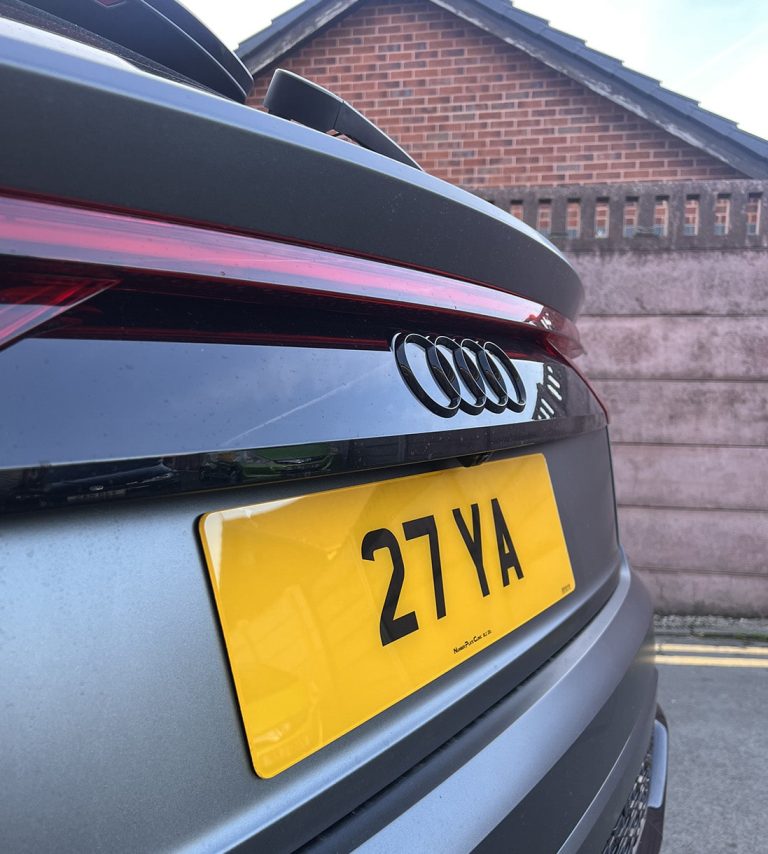
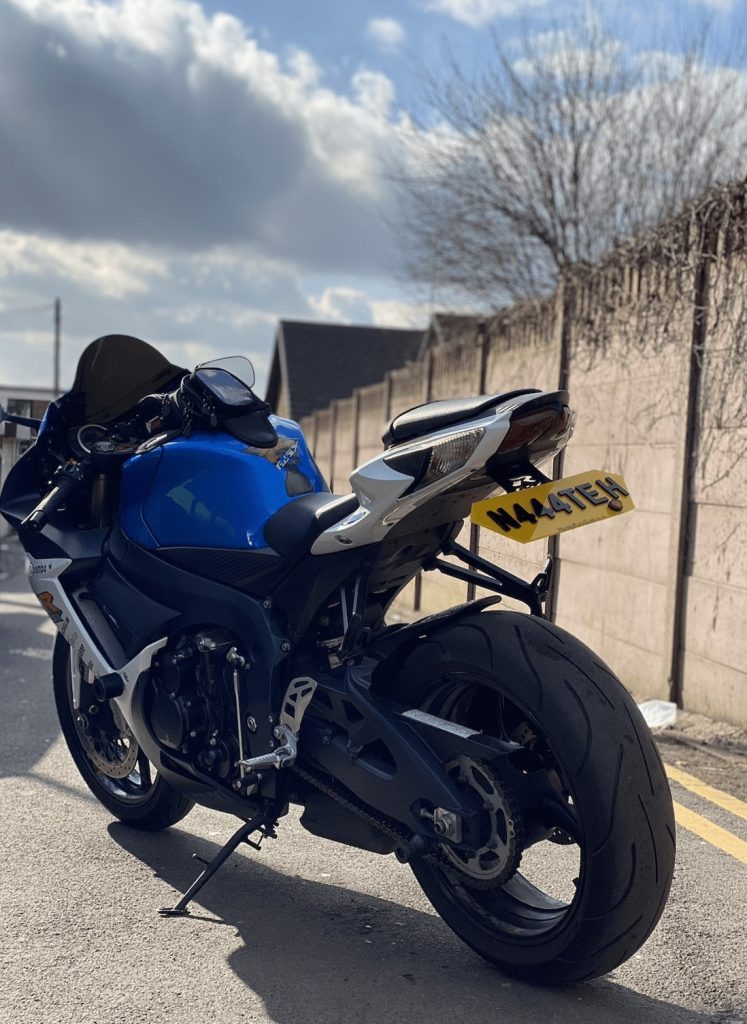
The short answer is yes, you can. Both 3D gel and 4D laser cut plates are available in road legal formats for motorcycles in the UK, and plenty of riders choose them for the clean, modern finish they provide. The longer answer involves understanding what makes a raised character plate road legal, what to avoid, and how to make sure what you order is genuinely compliant. This guide covers all of that clearly.
UK number plate regulations are governed by the Road Vehicles (Display of Registration Marks) Regulations 2001 and the British Standard BS AU 145e. Neither of these documents prohibits raised characters outright. What they specify is that the characters on a number plate must meet defined dimensions: 79mm tall, 50mm wide (except for the digit 1 and the letter I), with a stroke width of 14mm and correct spacing throughout.
The critical point is that these measurements apply to the characters as displayed, regardless of whether they are printed flat or raised. A road legal 3D or 4D plate uses raised characters that still conform to those dimensions. The raised effect is a surface finish, not a replacement for compliance.
For a thorough grounding in how the regulations apply to motorcycle plates generally, our UK motorcycle number plate guide is a reliable place to start.
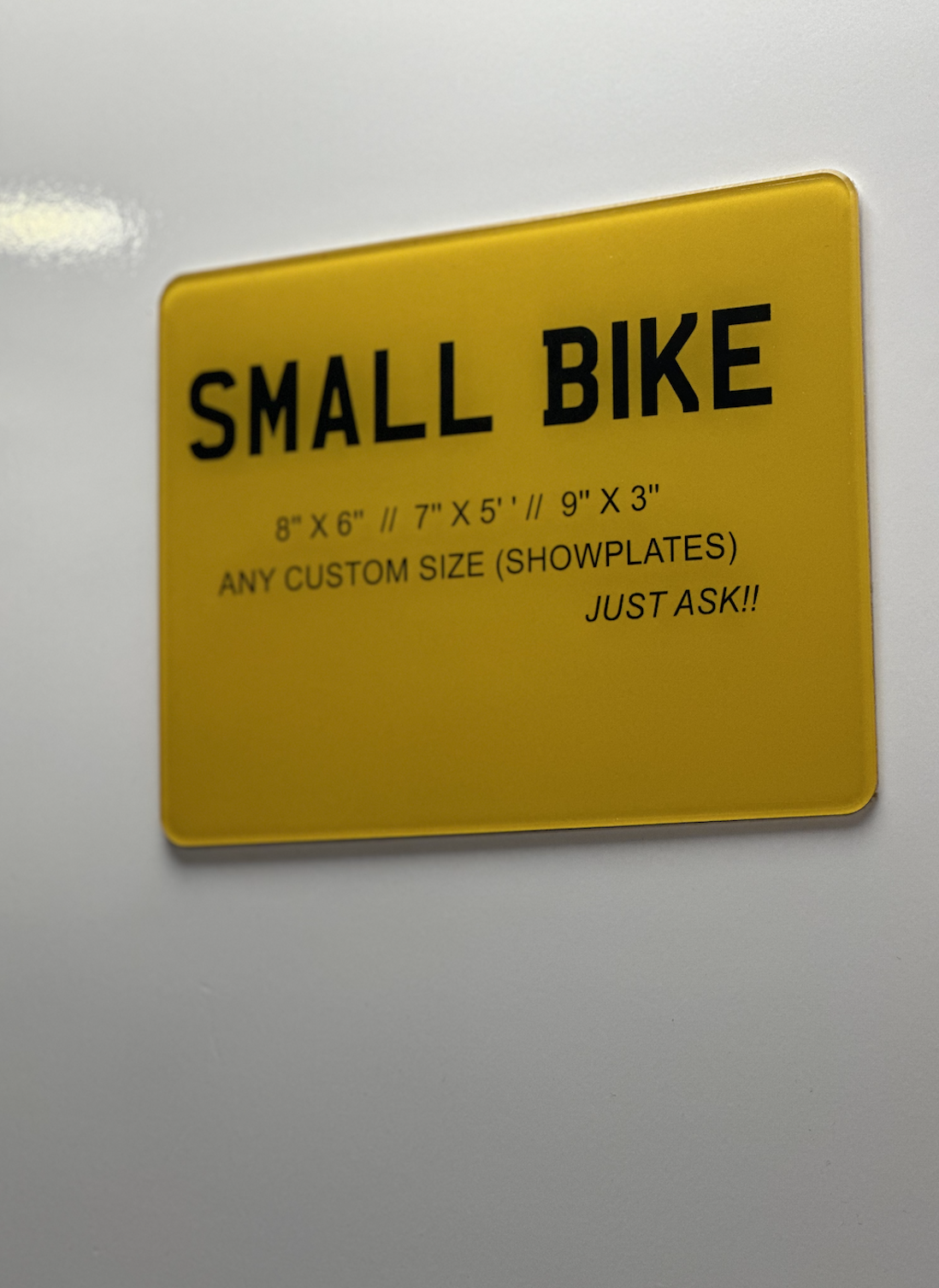
A 3D gel plate uses the standard printed character base of a conventional plate, with a domed resin coating applied over each character. This resin, often called gel, creates a rounded raised effect that catches the light and gives the plate a more premium appearance compared to a flat printed finish.
The gel itself is clear and does not alter the colour of the characters beneath it. The characters remain black on a white reflective background, as required by law for a rear motorcycle plate. Because the resin is applied over correctly sized characters, the underlying dimensions remain within legal tolerances.
Our 3D gel motorcycle plates are produced with BS AU 145e compliance built in, so the finish you see is matched by a correctly specified plate underneath.
The standard requires that the reflective background remain effective and that character contrast be maintained. A correctly produced 3D gel plate meets both requirements: the white reflective background is unaffected by the gel coating, and the black characters remain clearly legible against it. Where non-compliance tends to arise is when gel is applied over characters that were already the wrong size, or when the resin causes characters to spread beyond their specified width.
Buying from a registered supplier who produces plates to specification eliminates this risk entirely.
Where 3D gel plates use a resin coating over printed characters, 4D plates use laser cut acrylic characters that are bonded directly onto the plate surface. The result is a sharper, more angular raised effect with defined edges rather than the rounded dome of the gel finish.
4D characters are typically 3mm to 5mm thick and sit proud of the plate background. When produced correctly, the underlying character dimensions remain within the legal requirements, making 4D plates just as road legal as their gel counterparts. The finish is simply more geometric and striking in appearance.
Our post on riding in style with 4D motorcycle number plates shows what this looks like across a range of bike styles, and our guide to whether you can get 4D plates for motorcycles answers the most common questions about specification and ordering.
This is where many riders run into difficulty. The 4D plate market includes a significant number of show plates produced for display purposes only. These may use oversized characters for visual impact, non-standard fonts, or coloured backgrounds that create an eye-catching result without meeting the requirements for road use.
A show plate fitted to a bike ridden on public roads is not road legal, regardless of how it looks. The responsibility for fitting a compliant plate sits with the rider, not the supplier, so it is worth being specific when ordering. Always look for plates that are explicitly described as road legal and produced by a DVLA registered number plate supplier.
Most compliance issues with raised character plates fall into a small number of categories. Being aware of these makes it straightforward to avoid them.
None of these issues are unique to any one supplier or plate style, but they are more common in the budget end of the market where production standards are not always applied consistently.

Motorcycles carry additional considerations compared to cars when it comes to raised character plates. The single rear plate is typically smaller than a car plate and exposed to greater vibration, wind buffeting, and temperature variation during a ride. Both gel and acrylic bonding need to be suited to these conditions to remain secure and legible over time.
Road legal 3D and 4D motorcycle plates are available in both the standard oblong format (228mm x 178mm) and the square JAP style (178mm x 178mm). Our 3D bike plate range covers both formats, and our 4D motorcycle show plate options are clearly categorised so you can identify the road legal products from display-only items before you order.
ANPR readability is another practical factor worth considering. The Charles Wright 2001 font used on road legal plates is calibrated for camera recognition across a range of conditions. Plates that use raised characters of the correct dimensions in this font perform well under ANPR. Plates that deviate from the font or character sizing, even with a premium finish, may not read as reliably.
Before confirming any 3D or 4D plate for your motorcycle, run through these points to be confident in what you are buying.
Our complete guide to buying motorbike number plates and our motorcycle number plate laws FAQ between them cover the most common questions riders ask before purchasing.
Fitting a 3D gel or 4D plate to your motorcycle is a simple way to sharpen the look of your bike without stepping outside the law. The key is buying from a supplier who produces to specification and who is transparent about what is road legal and what is not.
At Number Plate Clinic, every raised character motorcycle plate we supply is produced to BS AU 145e, fitted with our registered supplier details, and available in both oblong and square formats. Browse our full motorcycle plate range to find the right style for your bike, or get in touch with us if you have a question before ordering.