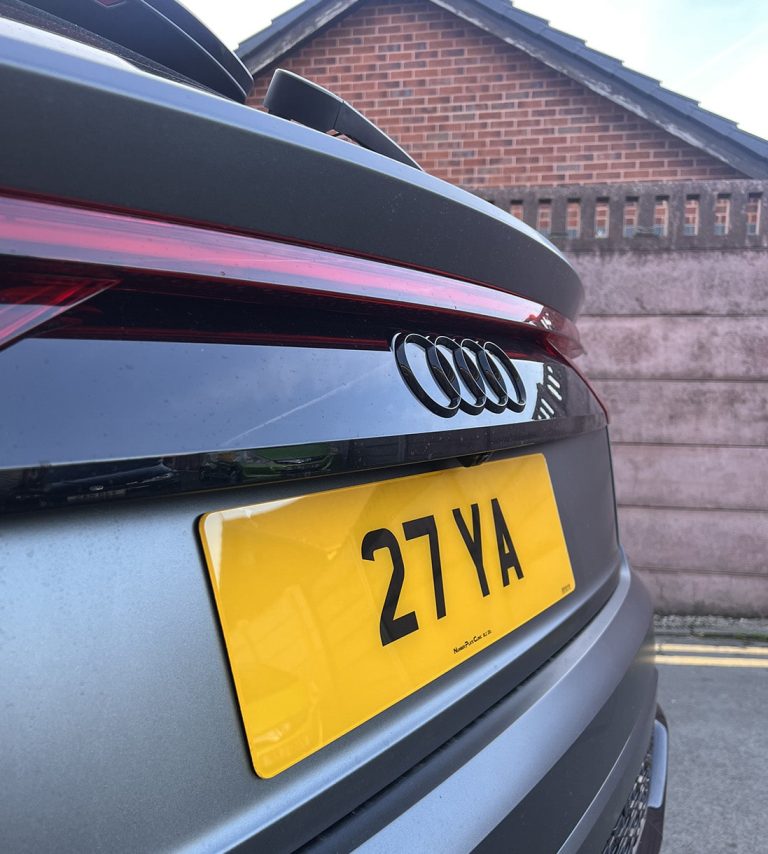

Most drivers replace their number plates reactively: after a crack, a failed MOT, or a roadside stop. But there are plenty of warning signs that appear well before any of those moments, and spotting them early means you are never caught off guard. This guide walks you through exactly what to look for, what the law requires, and when a replacement is genuinely necessary.
Before diving into the signs of deterioration, it helps to understand what the law actually requires. Your number plates must be clearly legible at all times when the vehicle is used on a public road. That means both the front and rear plate must be readable by an officer on foot and by ANPR cameras operating at normal road speeds.
The regulations are set out under the Road Vehicles (Display of Registration Marks) Regulations 2001 and the BS AU 145e manufacturing standard. Together, these cover character sizing and spacing, the reflective background material, the permitted font, and the overall condition of the plate. A plate that once met these requirements but has since deteriorated may no longer be road-legal, even if it looks acceptable to a casual glance.
Our 2D plates explained guide gives a clear overview of what a compliant plate looks like in practice.
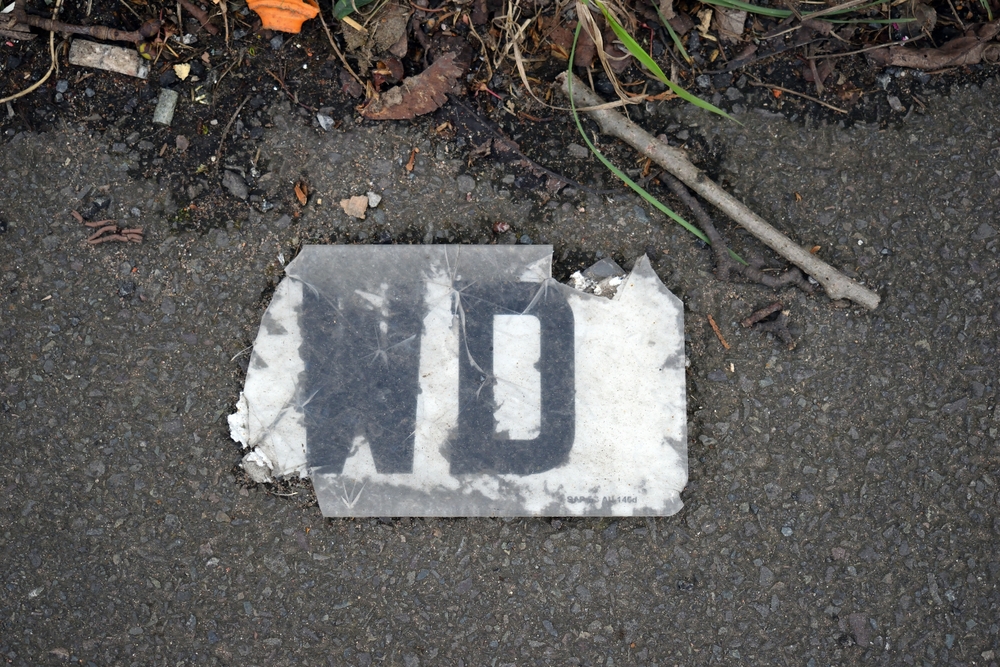
Some of the signs that a plate needs replacing are obvious; others are easy to miss until they become a problem at roadside or at MOT. Here are the most common ones to watch for.
The most common form of number plate deterioration is fading. Over time, UV exposure causes the white reflective background of the front plate and the yellow background of the rear plate to lose their original brightness. Characters that were once sharp and clearly defined can begin to appear washed out or low-contrast against the background.
A faded plate is not just an aesthetic issue. The contrast between the characters and the background is part of what makes a plate legible to ANPR cameras, particularly in overcast or low-light conditions. If your plates look noticeably duller than they did when new, it is worth examining them closely in natural daylight. Hold the plate at an angle and check whether the characters stand out clearly or seem to blend into the background.
Our article on what happens if your 2D number plate is not reflective enough explains the reflectivity requirement in detail and what failure to meet it can mean in practice.
A cracked plate is one of the clearest signs that replacement is needed. Even a crack that does not run through a character can compromise the structural integrity of the plate and, in cold weather, is likely to spread. A crack running through or near a character will affect legibility and is very likely to be flagged at an MOT inspection.
Physical damage also includes chips, deep scratches across characters, and warping caused by heat or impact. Any of these can result in the plate being assessed as non-compliant.
If you need guidance on fitting a replacement carefully to avoid creating new damage, our guide on whether you can drill a 2D number plate without cracking it covers safe installation in detail.
There is a difference between a plate that is temporarily dirty after a muddy drive and one that has accumulated grime in the recesses of the characters or at the edges of the plate surface. If cleaning no longer restores the plate to a clearly legible state, the surface material may have degraded to the point where it no longer meets the standard.
This most commonly happens with older plates where the surface coating has worn and is now absorbing dirt rather than repelling it. A fresh plate from a registered supplier will have the correct protective finish applied as standard. Our article on whether dirty 2D plates cause MOT failures explains how examiners assess plate condition.
Chemical staining from road salt, bird lime, or harsh cleaning products can permanently alter the surface of a number plate. Discolouration that is localised around characters makes them harder to read and, depending on severity, may render the plate non-compliant. If the affected area cannot be cleaned without further damaging the surface, replacement is the correct course of action.
A plate that is not securely fixed to the vehicle is a compliance issue even if the plate itself is in perfect condition. A plate that sits at an angle, is partially detached, or vibrates when driving can be misread by ANPR cameras and will be flagged by an officer.
If your plates have started to come away from the fixings, our guide on what to do if your number plate falls off sets out your options. Our number plate accessories include a full range of fixing kits for different vehicle types and mounting points, and in many cases a secure refit is all that is needed.
Before ordering new plates, run through this quick check on both the front and rear:
If you answer yes to any of the above, it is worth ordering a replacement sooner rather than later. Issues that are minor today can escalate quickly, particularly through winter conditions or in warmer months when UV exposure increases.
Number plate condition is checked at every MOT inspection. An examiner will look at both plates for legibility, structural condition, correct format, and secure mounting. A plate that fails on any of these grounds will result in a fail, and you will not be able to drive the vehicle away on public roads until the issue is resolved.
Our guide on why number plates fail an MOT explains the specific criteria examiners use and what is most commonly cited as the reason for a plate-related failure. Replacing your plates before the inspection date removes this as a risk entirely.
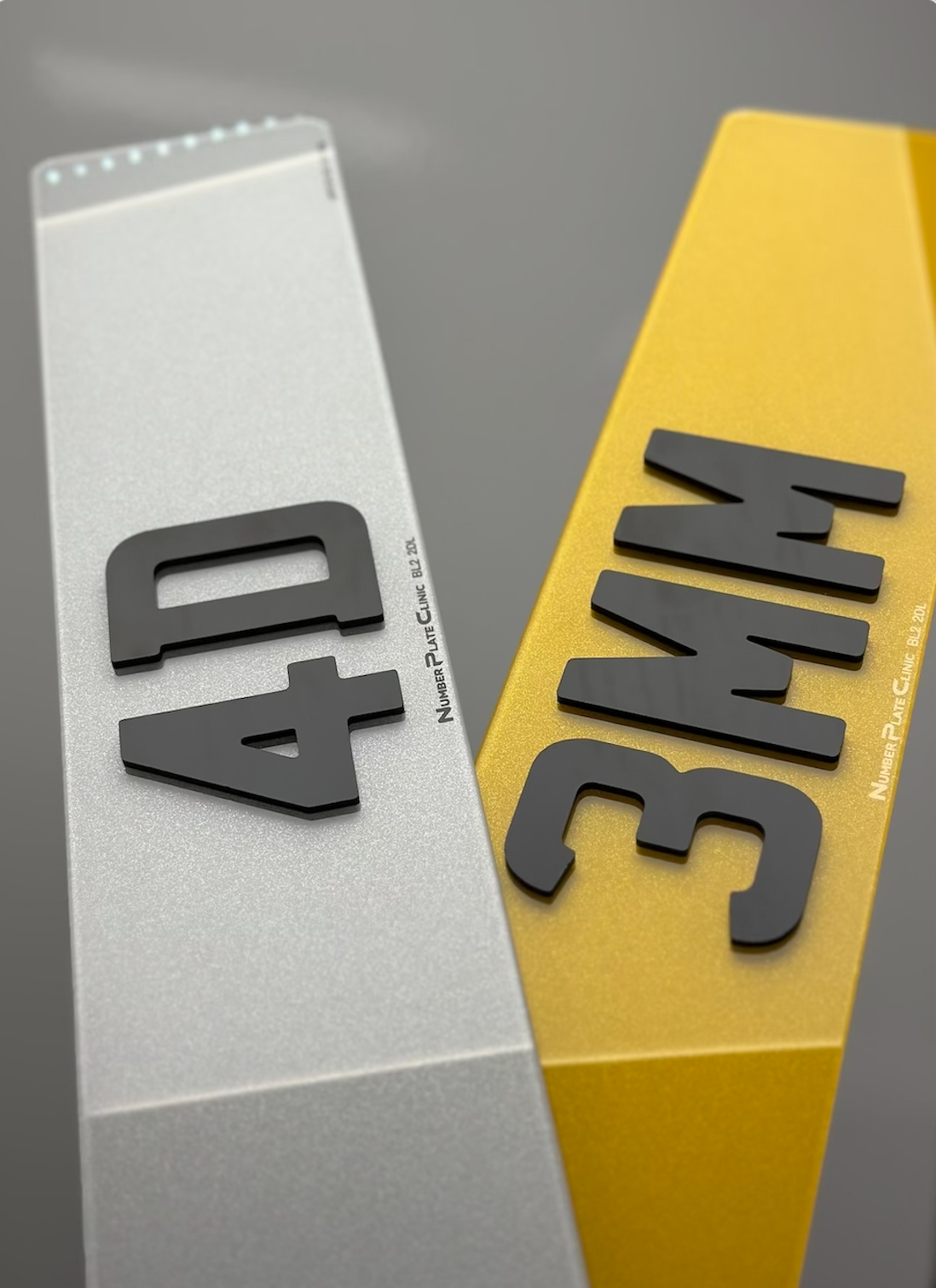
Once you know a plate needs replacing, the process is straightforward. You will need your V5C logbook as proof of entitlement to the registration and a form of photo ID. Our guide on what documents you need to buy 2D number plates in the UK covers exactly what is required, and our article on whether you can buy 2D plates without a V5C logbook explains the alternatives if your logbook is not to hand.
All plates supplied by Number Plate Clinic are manufactured to the BS AU 145e standard using approved materials, the correct Charles Wright font, and accurate character spacing. You can order 2D printed number plates, browse the full range in our shop, or use our plate search tool to find the right format for your vehicle. If you need a non-standard size, our short number plates and hex Lambo-style plates are available in fully compliant specifications, and our bike plates cover all motorcycle formats.
Once your replacement arrives, fitting it is a simple job. Our step-by-step guide on how to replace a 2D number plate at home walks through the process clearly, and the fixing hardware in our accessories range makes a clean, secure installation easy.
If you have any questions about whether your plates need replacing or which format is right for your vehicle, get in touch with us and we will give you a straightforward answer.
The drivers who never have plate-related issues are, almost without exception, the ones who check their plates as part of a regular vehicle check rather than waiting for something to go wrong. A minute or two spent examining your plates every few months is all it takes to catch deterioration early and replace plates before they become a problem on the road.