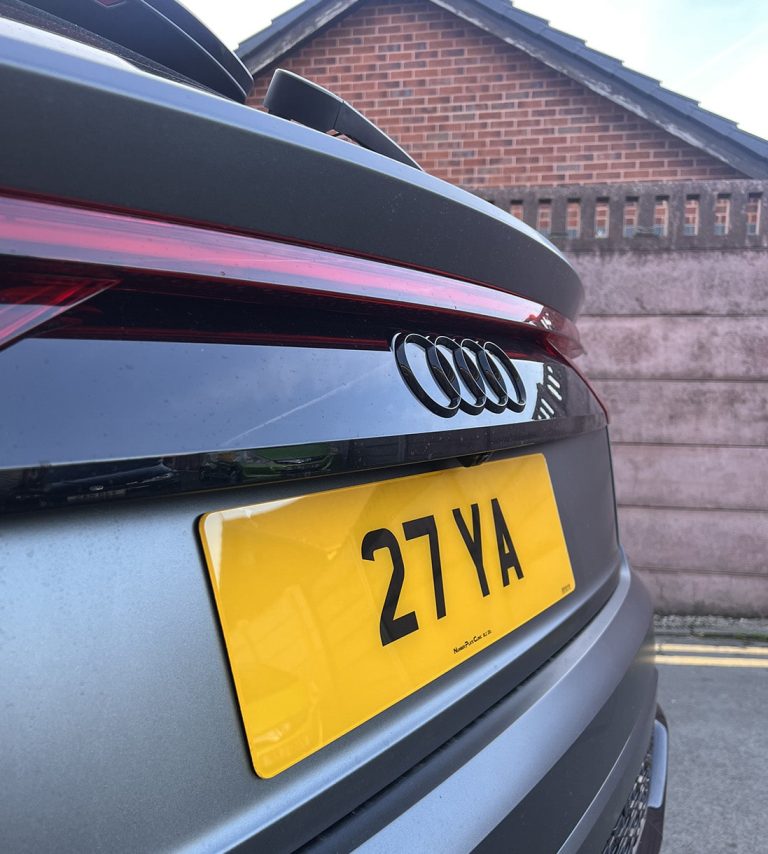
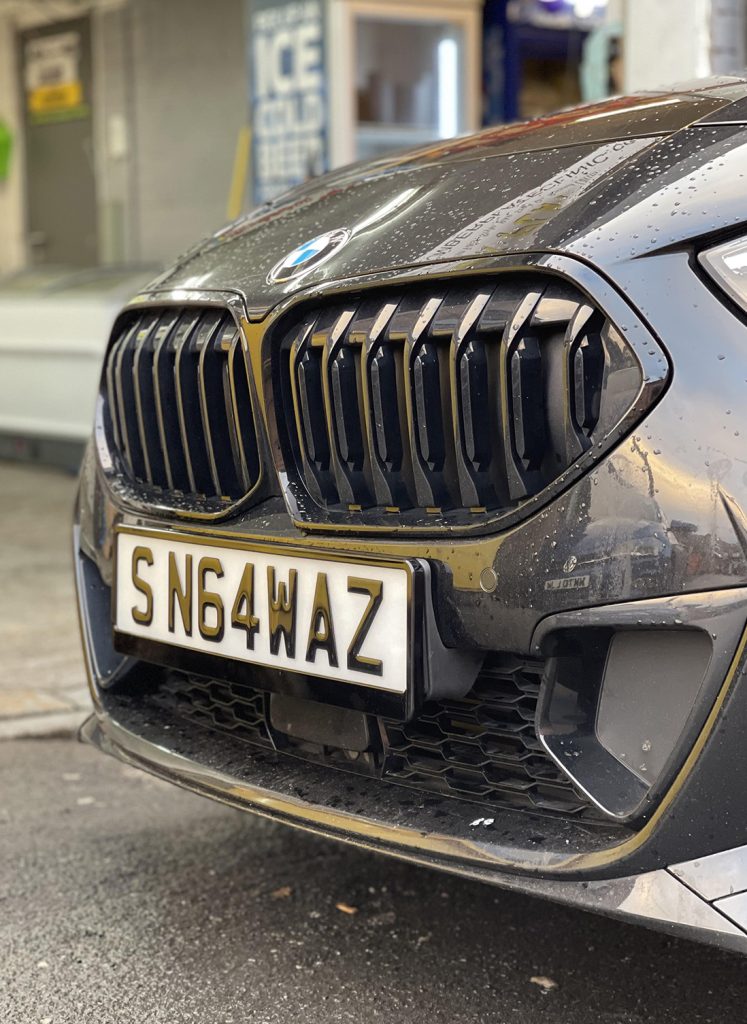
When you start looking into vehicle personalisation, the options for number plates can feel surprisingly varied. You might find yourself drawn to the sleek, understated look of a standard flat plate for the front of your car, while simultaneously wanting the premium, textured aesthetic of a 3D gel or 4D laser-cut plate for the rear. For many UK drivers, the question is not just about style, but about whether mixed number plates will lead to a conversation with a police officer or a failure at the next MOT test. You can find more detail on this in our 2D plates explained guide.
The short answer is yes, you can absolutely run different styles on the front and back of your vehicle. The UK regulations, governed by the DVLA and the current BS AU 145e standard, focus on the specific characteristics of each individual plate rather than demanding a perfectly matched pair. As long as the front plate meets the requirements for a front-facing registration and the rear plate does the same for the back, the fact that one is flat and the other is raised does not inherently break the law. This flexibility is why why do car dealerships usually fit standard 2d number plates at the point of sale; it is the safest, most universal option even if the owner later upgrades the rear.
To understand why mixing styles is permissible, it helps to look at how the law views your registration marks. The Road Vehicles (Display of Registration Marks) Regulations 2001, updated to reflect the latest British Standards, treats the front and rear of the vehicle as two distinct display areas. There is a legal requirement for white front and yellow rear why UK number plate colours are legally fixed, which ensures that other road users and ANPR (Automatic Number Plate Recognition) cameras can instantly tell which way a vehicle is facing. Even can imported cars use standard uk 2d number plates as long as they meet these colour and size specifications.
Beyond the colour, each plate must be independently compliant. This means if you choose a 2D front 3D rear combination, the 2D Printed Plates must have the correct spacing, font, and reflectivity, while the 3D Gel Plates characters on the rear must also adhere to the same sizing and spacing rules. Because both styles are recognised as road-legal when manufactured by a DVLA-registered supplier like Number Plate Clinic, they do not need to be twins to be compliant. You might even wonder are pressed metal plates classed as 2d plates; they are, and they can also be used as part of a mixed setup.
There are several practical and aesthetic reasons why you might consider different styles for each end of your car. For instance, many people prefer a 2D Printed Plates on the front because the nose of a car is more susceptible to stone chips, road debris, and heavy bug splatters. A flat surface can be easier to manage in these high-impact areas. You might find our guide on how to clean a 2d number plate without scratching the reflective layer helpful if you decide to go this route. It is also a popular choice for business users, which explains why do fleet and company vehicles almost always stick with standard 2d number plates for durability and cost-effectiveness.
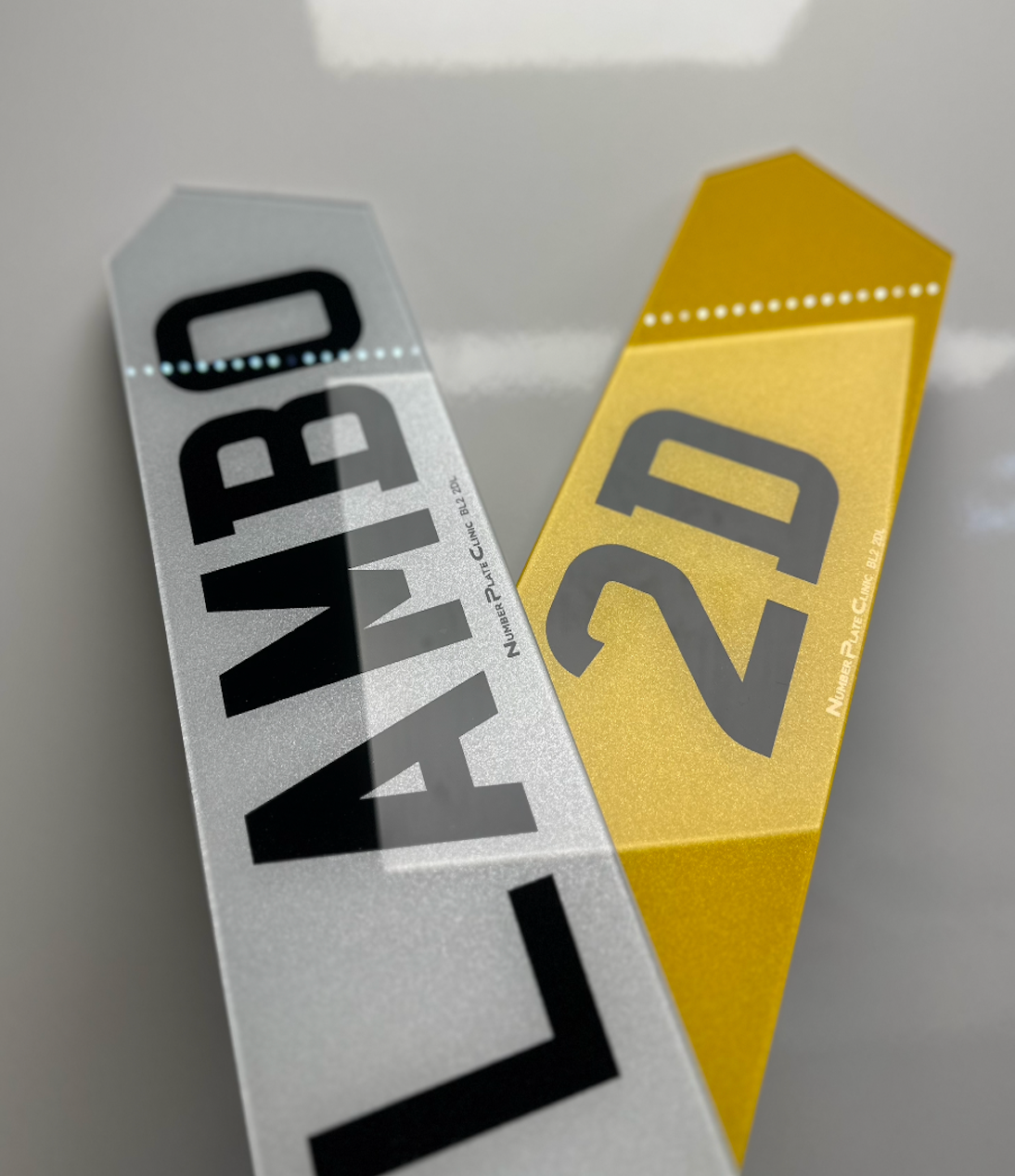
Meanwhile, the rear of the car often stays cleaner and is the side most people see when you are parked or driving in traffic. This makes it the perfect spot for a more decorative 3D or 4D finish. Some drivers also opt for specific shapes on the back, such as a Hex / Lambo-Shape Plates, while keeping a Short Plates format at the front to fit a smaller mounting area. If you’re looking for a specific size, you might ask can you have a smaller 2d number plate in the uk; the answer depends on your registration length. This level of customisation is perfectly fine as long as the core legal requirements of the BS AU 145e standard are met for both units.
When mixing these styles, it is important to know what makes each one legal. For a 2D Printed Plates, the legality rests on the flat print being crisp, non-reflective in the characters, and highly reflective in the background. If you have ever wondered what happens if your 2d number plate is not reflective enough, the answer is usually an MOT fail or an ANPR error. You should also be aware of environmental factors, such as do 2d number plates fade in the sun, which can affect reflectivity over many years.
For 3D Gel Plates or 4D Laser-Cut Plates, the legality depends on the characters being a single solid black colour and not using any prohibited effects like carbon fibre or honeycomb patterns for road use. As a trusted specialist, we ensure that every raised character plate we produce remains fully compliant with number plate regulations DVLA, giving you peace of mind regardless of the texture you choose. If you are a motorcycle enthusiast, you can also explore our bike plates for similar customisation options.
One of the most frequent worries is whether different number plate styles will confuse ANPR systems. Modern cameras are sophisticated enough to read both flat and raised characters with ease, provided the plate is clean and the characters are not damaged. If you are concerned about technical issues, reading about what happens if ANPR cameras cannot read your 2d number plate can provide further clarity on how these systems interact with your vehicle. One common issue is dirt buildup, so it’s worth checking do dirty 2d plates cause mot failures before your next inspection.
Another concern involves the MOT test. A common myth is that plates must match as a pair to pass. In reality, the examiner checks each plate against a checklist of visibility and physical condition. They will look at whether the characters are secure and whether the plate is securely attached. If you are fitting them yourself, you might want to know can you drill a 2d number plate without cracking it to ensure a professional and secure finish that won’t rattle or fall off. If you encounter issues with vibrations, our article on why do 2d number plates rattle and how do you stop it offers several practical solutions.
Because you are dealing with two different manufacturing styles, your maintenance routine might vary slightly. A 2D Printed Plates is very resilient to winter conditions, but you may still wonder do 2d plates survive winter road salt better than gel plates. Generally, both are highly durable if sourced from a quality supplier, but keeping them free of grime is essential for longevity. However, be careful with high-pressure cleaning; can a jet wash damage a 2d number plate is a common question, and the answer is yes if used too closely. Regularly checking for wear is a good habit, and knowing how to tell when your number plate needs replacing will help you stay ahead of any legal issues. You can even learn how to replace a 2d number plate at home simple step by step guide to save on garage fees.
If you notice one plate is starting to look worse for wear—perhaps why is my number plate turning yellow or why has my 2d number plate lost its shine—you can replace just that one plate. You can also find help on how to safely remove old adhesive from a 2d plate without damaging the bumper if you decide to swap a plate out. You do not have to buy a full set if only the front or rear is damaged.

Whether you are sticking with tradition or mixing it up, the process for getting new plates remains the same. As a registered supplier, we are legally required to verify your identity and your right to the registration. You can find a full list of what documents do you need to buy 2d number plates in the UK on our site, which includes your V5C logbook and a form of ID. For those needing a refresh, check what documents do you need to get a replacement number plate to ensure you have everything ready. You might also ask can you buy 2d plates without a v5c logbook; usually, some form of entitlement document is mandatory for road-legal plates. If you’re looking for something purely for a track day or event, we also offer show plates.
If you are looking for a replacement because of a minor mishap, such as what to do if your number plate falls off in the UK, or you are wondering should you replace number plates after a minor accident, we can help you get back on the road quickly. We even have information on what happens to your number plates when you write off your car if the damage is more severe. For those looking for a new registration entirely, you can search plates on our database. Our how to order a replacement number plate online guide simplifies the steps, ensuring you get exactly what you need, including any number plate accessories required for fitting. Specialist rules also apply to older vehicles, such as 2d number plates on classic and pre-1973 cars, so be sure to check those if relevant.
Ultimately, the choice to mix 2D and 3D or 4D plates is yours. It is a subtle way to customise your vehicle while maintaining full number plate compliance. If you are ready to browse the different styles available, including our premium 2D options, you can visit our shop to see the full range of road-legal options, or contact us if you have a specific question about your vehicle’s setup.