Spend enough time at a bike meet or scrolling through custom builds and you will eventually spot a cruiser or a bobber with a plate tucked away on the swingarm. It is a look that screams classic Americana, clearing up the rear mudguard to let the tyre and the tail light take centre stage. For many UK riders, the immediate question is not how it looks, but whether a side mounted number plate UK setup will survive a roadside check or an MOT. The short answer is yes, they can be legal, but the margin for error is remarkably thin between a stylish modification and a £1,000 fine.
Motorcycle plate legality in Great Britain is governed by a strict set of rules that cover everything from the angle of the plastic to the exact millimetre of the font. While the law does not explicitly ban mounting a plate to the side of the wheel, it does mandate that the registration must be clearly visible from specific vantage points. This is where most custom builders run into trouble. If your leg, the exhaust, or the rear spindle blocks a single character when viewed from behind, the plate is technically non-compliant. Understanding these nuances is the difference between riding with confidence and constantly checking your mirrors for blue lights.
The DVLA is very specific about how a bike should present its identity to the world. Current motorcycle plate regulations state that all bikes registered after 1 September 2001 must display a rear number plate. Unlike cars, motorcycles are not required to have a front plate, which gives riders more freedom at the sharp end, but makes the rear display even more critical for law enforcement and cameras.
For a side-mounted setup to remain within the law, it must be mounted vertically. This means the characters should be read from left to right, not stacked one on top of the other. Many riders are tempted by a vertical tower mount for aesthetic reasons, but this is a quick way to fail an MOT. To get a better grasp of the basics before you start drilling into your swingarm, it is worth checking out a UK motorcycle number plate guide to see how standard setups are measured. The plate must also be lit. If you move your plate to the side, you must also move (or install) a dedicated white light that ensures the registration is legible in the dark.
Central to these rules is the visibility triangle. A person standing 20 metres directly behind the bike must be able to see the entire plate. Crucially, the plate must also be visible at a 45-degree angle from either side. This is often the downfall of side mounts; while the plate might be visible from the left, the rear tyre often obscures it when viewed from the right. If the tyre blocks the view, the mount is illegal.
It is not just about where the plate is, but what it is made of. Since September 2021, the mandatory standard for all new plates has been BS AU 145e. This British Standard ensures the plate is tough enough to withstand the grit, salt, and vibrations of UK roads. When you buy bike plates from a reputable, DVLA-registered supplier, you are guaranteed a product that meets these durability requirements. A flimsy home-made bracket on a side-mount might look the part, but if the plate itself is not up to the BS AU 145e motorcycle standard, it could be deemed illegal regardless of its position.
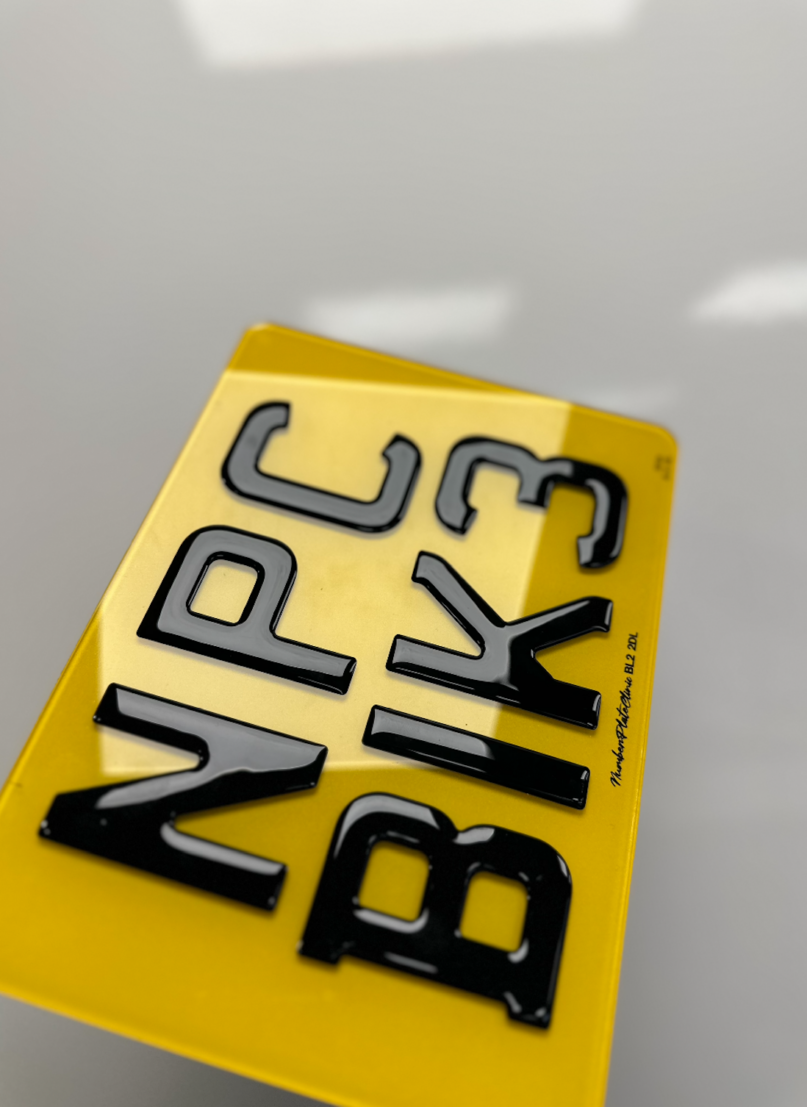
Many riders who choose a side-mount are also looking for other ways to make their machine stand out, often opting for raised characters. A common query we receive is whether you can get 4D plates for motorcycles that still meet road-legal standards. The answer is a definitive yes, provided the characters are solid black and the font used is the standard Charles Wright typeface. The same rules apply to 3D gel options. If you are curious about the aesthetic difference, you might want into the specifics of riding in style with a 4D motorcycle number plate to see how the depth of the laser-cut acrylic can subtly enhance a custom side-mount bracket.
However, the side-mount placement makes the plate more vulnerable to clips and bumps in tight spaces. This is why material quality is paramount. If you are considering these styles, it is useful to ask are 3D gel number plates suitable for motorcycles given your specific riding habits. For most, the resin-domed characters are incredibly hardy and perfect for a bike that sees regular use. For those who prefer a more traditional look with a modern twist, you can also can you get 3D plates for motorbikes and vans that maintain full compliance while offering a premium finish.
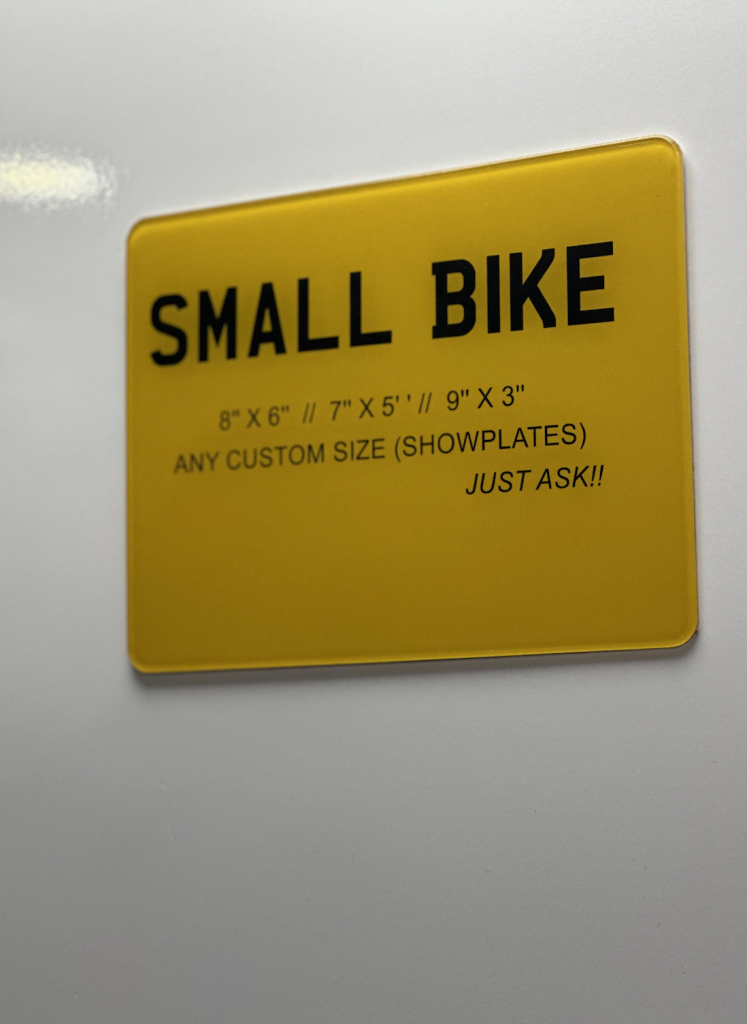
Size is the most frequent area where riders fall foul of legal motorbike plates. The standard UK motorcycle plate size is 230mm x 178mm (9 inch x 7 inch). While some riders try to fit smaller show plates to their side mounts to keep the profile slim, this is a legal red flag. The DVLA mandates specific character heights of 64mm and a width of 44mm. If your plate is too small to accommodate these dimensions with the required margins, you are risking an on-the-spot fine.
We have put together a detailed breakdown of motorcycle number plate sizes to help you determine if your custom bracket can actually hold a legal plate. If you find that a standard square plate looks too bulky on your side mount, you might consider specialised plate shapes, which are sometimes used on smaller imports, provided they still meet the character size requirements for the UK road. Staying within these bounds is essential, especially if you are buying a motorcycle at auction and aren’t sure if the previous owner’s modifications were actually above board.
Customising your bike often goes hand-in-hand with a personal registration. Fortunately, you can get private plates for bikes and mount them to the side, just like a standard registration. The regulations don’t change just because the plate is a cherished number. You still need to follow the motorcycle number plate UK laws FAQ to ensure that your investment doesn’t end up being confiscated by the authorities for improper display.
The annual test is the ultimate judge of whether your side-mounted number plate UK setup is acceptable. An MOT tester will look for two main things: security and visibility. The bracket must be robust. If the plate wobbles or looks like it might vibrate off and become a hazard to other road users, it is a failure. Furthermore, the tester will check the angle. The plate should be vertical or at a very slight angle (no more than 15 degrees from vertical) to ensure it can be read by ANPR cameras.
Before you head to the garage, it is wise to learn how to prepare your motorcycle number plate for an MOT. This includes cleaning the plate so characters are legible and ensuring your number plate light is functioning perfectly. A side mount often catches more road grime than a centrally mounted plate, so it needs a bit more attention. For a comprehensive look at what to expect, the complete guide to buying motorbike number plates covers the transition into the current standards, ensuring you’re not caught out by recent tweaks to the manual.
If you are planning an international trip, keep in mind that UK rules are one thing, but European requirements can differ. Many riders wonder do UK motorcycle number plates work in Europe when mounted in a custom position. Generally, as long as it is legal in the UK and carries the UK identifier, you are covered under international agreements, but the visibility rules remain paramount for passing through borders and toll booths.

Deciding to move your plate to the side is a big aesthetic choice. To make sure you do it right the first time, you need a partner who understands the law as well as the look. We specialise in providing a variety of options, from 3D bike plates that offer a classic gel finish to the more striking 4D designs. If you are building a bike specifically for the show circuit and plan to transport it rather than ride it on the road, you might even explore specialised show plates which offer even more creative freedom, though these should never be used on public highways.
For those who use their bikes daily, sticking to key legal requirements for motorcycle number plates is the only way to ensure hassle-free riding. Whether you are buying bike plates for a new project or replacing a damaged one, always ensure your supplier is registered with the DVLA. This ensures that the spacing, font, and reflectivity all meet the required standards, keeping you on the right side of the law.
Understanding the UK rules for 4D and 3D gel plates is vital as the technology behind plate manufacturing evolves. We are currently seeing a shift towards more durable materials and higher-contrast finishes, all designed to keep the UK’s roads safe and manageable for every rider. If you have lingering questions about specific dimensions or mounting hardware, our FAQ about motorbike number plates is an excellent resource for quick answers to common rider concerns.
Ultimately, a side-mounted plate can transform the profile of your motorcycle, giving it a sleek, custom feel that stands out from the crowd. By paying attention to the visibility angles, ensuring adequate lighting, and using a high-quality BS AU 145e compliant plate, you can enjoy the custom look without the dread of a police pull-over. For the most up-to-date advice and a huge range of legal options, explore everything you need to know about motorbike number plates in 2026. When you are ready to make the switch, you can find our full range at our bike plates category page, where style meets strict legal compliance.