Riding a motorcycle is about many things, from the sense of freedom on a coastal road to the sheer practicality of filtering through morning traffic. However, the one part of your bike that is strictly functional—the number plate—is also the most heavily regulated. For many riders, the line between a sleek, custom look and an illegal motorcycle number plate can feel frustratingly thin. Understanding motorcycle plate legality is not just about avoiding a roadside stop; it is about ensuring your vehicle is identifiable to other road users and authority systems, keeping every journey straightforward.
The rules governing motorcycle plates are more specific than those for cars, primarily because of the limited space on a bike’s rear and the requirement that they are displayed in a two-line format. While it might be tempting to opt for a tiny ‘show plate’ to clean up the tail of a sports bike, the DVLA is very clear on what constitutes a road-legal display. By getting the details right, from the font spacing to the physical material of the plate itself, you ensure your bike remains on the right side of the law.
Every legal plate in the UK must now meet the BS AU 145e standard. This technical designation ensures that the plate is durable, reflective, and readable by Automatic Number Plate Recognition (ANPR) cameras. If you are buying bike plates today, they must be made from high-quality acrylic that can withstand the vibrations and weather exposure unique to motorcycling. A plate that cracks easily or fades in the sun will quickly become non-compliant because its legibility is compromised.
At Number Plate Clinic, we treat these technical requirements as the bare minimum. As a DVLA-registered supplier, we ensure every plate we produce adheres to these exact standards, meaning yours will be tough enough to handle the road while remaining fully visible. If you are unsure whether your current setup meets these marks, checking how to prepare your motorcycle number plate for an MOT is a proactive way to avoid an unnecessary failure during your annual inspection.
One of the most common reasons for a bike to be stopped is the size of the plate. Unlike cars, motorcycles (and tricycles registered after 1 September 2001) must only display a rear number plate. Because the space is smaller, there is a temptation to fit ‘flexy’ or ‘mini’ plates. However, motorcycle number plate sizes are fixed by law to ensure the characters are large enough to be read from a distance of 20 metres.
The standard size for a UK motorcycle plate is 228mm x 178mm (9″ x 7″). While the overall size of the acrylic can sometimes vary slightly if you have a shorter registration, the margins around the characters must still be maintained. Reducing the plate size to the point where the letters are cramped or the border is missing makes it an illegal motorcycle number plate. For those with imported bikes or specific tail tidies, road-legal bike plates offer a compliant solution that often fits better on non-standard brackets without breaking the rules.
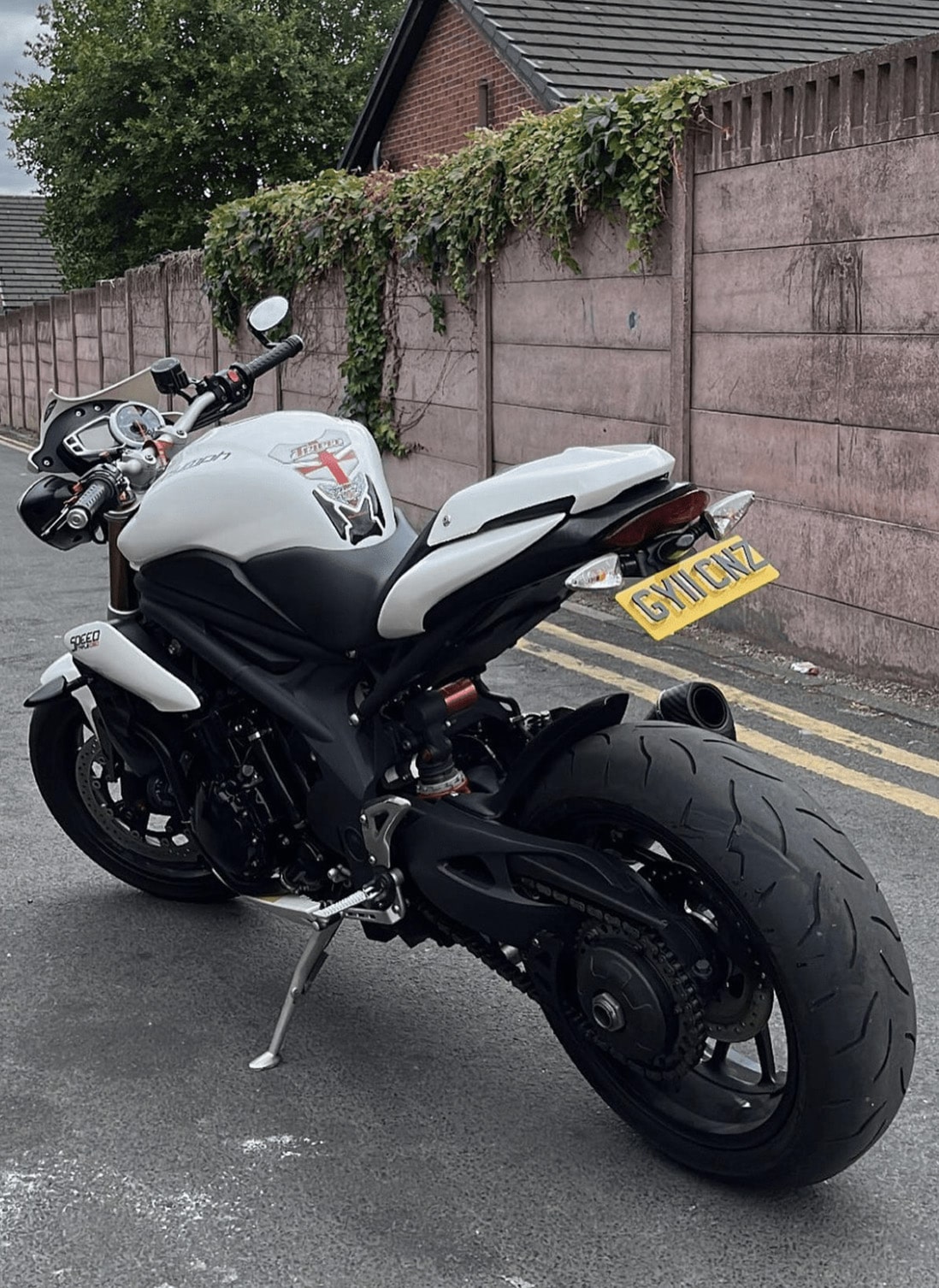
The motorcycle plate font and spacing are perhaps the most scrutinised elements of motorcycle plate regulations UK wide. The law requires the use of the ‘Charles Wright’ font, which was specifically designed for maximum clarity. Any attempt to use stylised fonts, italics, or ‘fancy’ lettering will immediately render the plate illegal. This includes using bolts or screws to cleverly change the look of a character, such as turning an ’11’ into an ‘H’.
The spacing is just as vital. On a motorcycle, the registration must be split over two lines. The characters must be 64mm tall and 44mm wide (except for the number 1 or the letter I). The space between characters must be 10mm, and the gap between the two lines must be 13mm. If these measurements are off by even a few millimetres, the plate is technically non-compliant. Many riders find that reading a UK motorcycle number plate guide helps clarify these dimensions before they commit to a new purchase.
There is often confusion surrounding raised lettering. To be clear: 3D gel and 4D laser-cut characters are legal, provided they are in the correct font and have no shadowing or different colours. The characters must be a solid, single shade of black. When considering are 3D gel number plates suitable for motorcycles, the answer is yes, as long as they meet the BS AU 145e durability requirements.
For those looking for a more premium finish, 4D plates offer a sharp, high-definition look. We often receive questions like can you get 4D plates for motorcycles, and the answer is absolutely. These plates are increasingly popular for those who want their bike to stand out while staying well within the law. However, it is essential to avoid ‘show plates’ which might use 4D characters but violate motorcycle plate display law as they lack the necessary manufacturer markings at the bottom.
Beyond the characters themselves, a legal plate must carry specific ‘small print’. In the bottom centre of the plate, the manufacturer’s name and postcode must be visible. In the bottom right, the British Standard code (BS AU 145e) must be printed. Without these two pieces of information, the plate is illegal, even if the font and size are perfect. This is why buying bike plates from an authorised, registered retailer is so important.
These markings are the mark of a correct motorcycle number plate format. They tell the authorities that the plate was made by a professional who followed the DVLA motorcycle plate rules. If you are buying a motorcycle at auction, one of the first things you should check is the rear plate for these identifiers. If they are missing, replacing the plate should be your first job before venturing out on the road.
Walk around any bike meet and you will likely see plates that are the size of a smartphone. These are commonly referred to as ‘show plates’. While they might look great for a photoshoot or on a bike that never leaves a trailer, they have no place on the public highway. Using a show plate is one of the quickest ways to receive a fixed penalty notice. It also guarantees a fail at your next MOT.
Some riders believe that as long as the numbers are readable, the size doesn’t matter. This is a myth. The police often use pre-measured devices to check margins and letter heights. To clear up any ambiguity, you can check our motorcycle number plate UK laws FAQ which explains the specific risks associated with non-standard plates. If you are tempted to customise, stick to legal enhancements like 3D bike plates that provide a custom feel without the legal headache.

Riders often ask about the legality of borders or flags. You are allowed to have a non-reflective border on your plate, provided it does not interfere with the characters. You can also display certain flags, such as the Union Jack, the Cross of St George, or the Scottish Saltire, on the left-hand side. However, if you are planning to take your bike abroad, it is worth asking: do UK motorcycle number plates work in Europe? The short answer is yes, but you may need a separate ‘UK’ sticker if your plate does not feature the UK identifier and the Union Jack.
Another area of interest is personalising the registration itself. Many riders ask can you get private plates for bikes as it adds a unique touch to the machine. Whether it is a tribute to a favourite racer or just your initials, a private registration must still follow all the formatting rules we have discussed. Even the most expensive ‘cherished’ registration becomes an illegal motorcycle number plate if it is printed on the wrong size acrylic or in the wrong font.
The complexities of motorcycle plate legality do not have to be a burden. By sticking to a reputable, DVLA-registered supplier like Number Plate Clinic, you take the guesswork out of the process. Whether you are looking for high-quality bike style plates for an exhibition or a standard road-legal replacement, we ensure every product we ship is designed to be fully compliant.
If your current plate is cracked, faded, or simply doesn’t meet the latest standards, now is the time to update it. Browsing our dedicated motorcycle plate range allows you to see the options available, from 3D gel to 4D styles, all designed with the modern rider in mind. For a deeper dive into the technical details, our guide on what are the key legal requirements for motorcycle number plates in the UK provides a comprehensive breakdown of the law.
Staying legal doesn’t mean your bike has to look boring. It just means making informed choices about the quality and format of your equipment. When you buy bike plates that are built to last and designed to comply, you can spend less time worrying about the regulations and more time enjoying the ride. For more specific queries, our FAQ about motorbike number plates covers everything from fitting instructions to legal nuances, ensuring you have all the information you need at your fingertips.