Every motorcyclist knows the pull of customisation. Whether it is a sleek exhaust, a custom paint job, or personalising the rear end with a tail tidy, making a bike your own is part of the culture. However, when it comes to the number plate, there is a fine line between aesthetic appeal and a run-in with the law. One particular trend that often catches the eye is the tinted number plate. It looks stealthy, certainly, but it frequently leaves riders asking a critical question: what is the actual motorcycle plate legality regarding these smoked or darkened designs?
In the UK, the rules governing how we display our registration marks are strict. These regulations are not just about bureaucracy; they exist to ensure that every vehicle on the road is easily identifiable by other road users, the police, and Automatic Number Plate Recognition (ANPR) cameras. If you are browsing for your next set of motorbike number plates everything you need to know in 2026 revolves around one central theme: visibility. If a modification compromises the ability of a camera or a person to read your plate, it is likely on the wrong side of the law.

To put it simply, tinted number plates are not road legal in the UK. The British Standard for number plates, currently BS AU 145e, specifies exactly how reflective a plate must be and what colours are permissible. Front plates must be white, and rear plates (which are the only ones required on a motorcycle) must be yellow. By applying a tint, you are essentially altering the background colour and reducing the reflectivity of the material.
The registration plates must be manufactured from a retro-reflective material. This material reflects light back towards the source, such as a car’s headlights or a speed camera’s flash. A tint acts as a barrier, absorbing light rather than reflecting it. This creates a significant problem for ANPR systems. When you are looking to buying bike plates from a reputable supplier, you will notice that tinted options are often missing from the road-legal categories for this very reason.
Riders often wonder why a subtle tint is such an issue. The problem is that ‘subtle’ is subjective. What looks readable to you in broad daylight might be invisible to a camera at dusk. Because the law requires consistency across all vehicles, any darkening of the yellow background is considered a failure to comply with the number plate display regulations motorcycle riders must follow. If you are unsure about the basics, checking a UK motorcycle number plate guide can help clarify what is expected on your bike.
If you cannot have a tint, what can you actually do to customise your bike’s rear end without getting a ticket? The current British Standard, BS AU 145e, focuses on durability and legibility. For a plate to be legal, it must display the manufacturer’s name and postcode, along with the supplier’s mark and the British Standard code in the bottom corner. This tells the police that the plate has been made by a registered specialist who follows the rules.
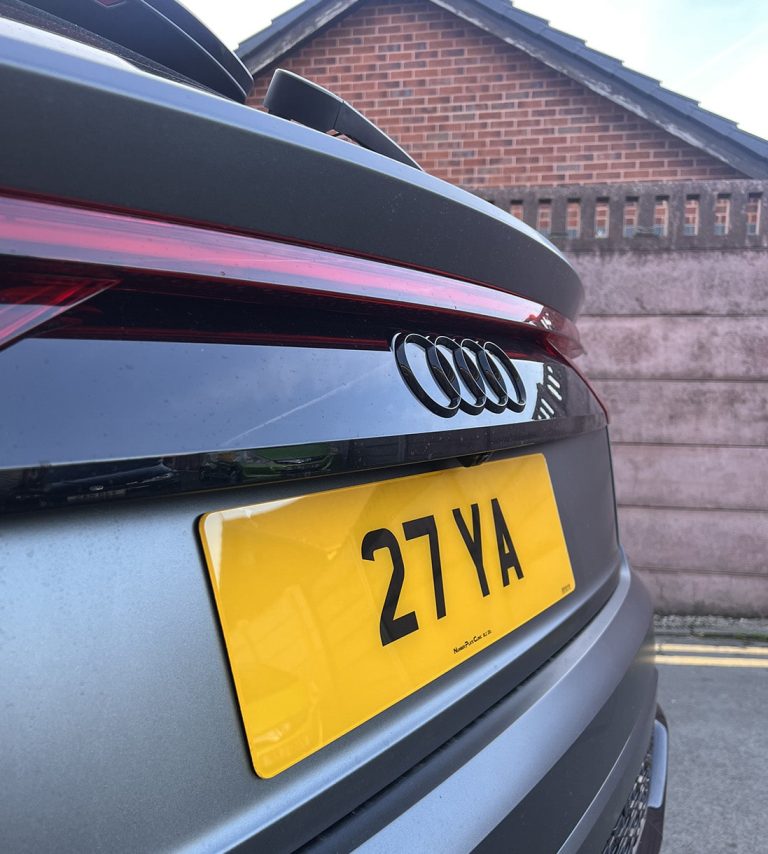
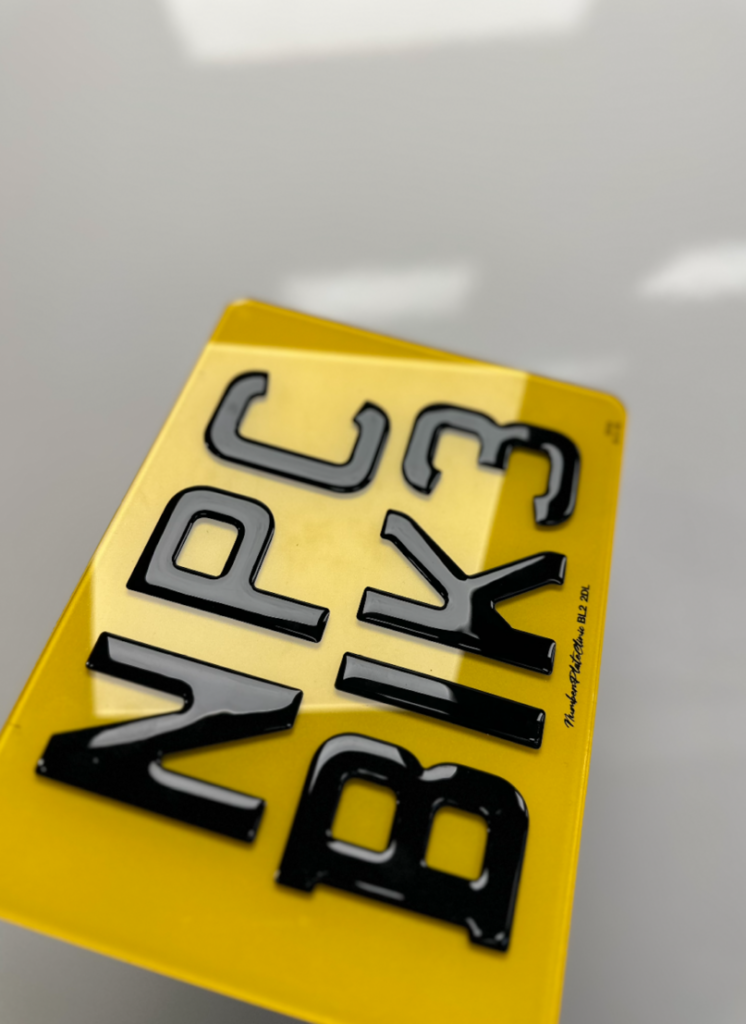
There are several motorcycle plate rules regarding font and spacing. The characters must be the standard font, and they cannot be slanted or rearranged to look like a word. While the background must be a solid, non-patterned yellow, you do have some modern options for the characters themselves. For instance, many riders ask, can you get 3D plates for motorbikes and vans? The answer is yes, provided the characters are a solid black and meet the height and width requirements.
Similarly, 4D characters are also a popular choice. These involve laser-cut characters that stand proud of the plate. If you are riding in style look at 4D motorcycle number plate options that use individual characters. These are perfectly legal as long as they aren’t combined with a tinted background. For a deeper dive into the specifics, you might find the key legal requirements for motorcycle number plates in the UK a useful resource to ensure every millimetre of your plate is up to code.
While the background cannot be tinted, the texture of the letters is where you can truly customise. If you have been wondering are 3D gel number plates suitable for motorcycles, the answer is generally yes. They are weather-resistant and add a premium feel to the bike. The same applies to more prominent designs, though you should always confirm can you get 4D plates for motorcycles that are fully compliant before fitting them, as some modified styles might not meet the strict criteria for road use.
It might seem like a small detail, but the police take legal motorbike plates quite seriously. If you are stopped with a tinted plate, the consequences are rarely just a ‘fix-it’ light warning. You could face an on-the-spot fine, and your bike will fail its MOT if the tester deems the plate to be non-compliant with the British Standard.
Understanding how to prepare your motorcycle number plate for an MOT is essential. A tinted plate is a guaranteed fail because it obscures the reflective surface required for the test. Furthermore, if you are using a non-compliant plate on a vehicle with a private registration, the authorities have the power to withdraw that registration. For those who have invested in a custom mark, looking into how can you get private plates for bikes safely is much better than risking the loss of your favourite plate over a simple tint.
There is also the matter of insurance. In the event of an accident, some insurers may argue that a non-compliant or ‘illegal’ modification to the vehicle—even something as seemingly minor as a darkened plate—could affect a claim. It is always better to stick to the road legal bike square JAP plates or standard shapes that have been certified for road use.
You will often see tinted plates for sale, often labelled as ‘show plates’. This is a legal loophole. Suppliers can sell these items as long as they are clearly marked as being ‘not for road use’. They are intended for use on private land, at bike shows, or for photography. The trouble begins when a rider fits them to their bike and takes it onto the public highway.
When you buy bike plates from a certified supplier, a clear distinction is made between what is legal and what is for show. For example, 4D bike show plates are fantastic for events, but it is important to know which options are cleared for the daily commute. Being a registered supplier means following responsibility to keep riders on the right side of the law, adhering to British Standards for all road-going products.
If you are ever in doubt, checking a FAQ about motorbike number plates can save you a lot of hassle. Many riders find themselves confused by the sheer volume of conflicting advice on forums, but the official regulations are actually quite straightforward once you ignore the ‘show plate’ marketing.
Beyond the tint, there is the issue of size. In the UK, motorcycles have different size requirements compared to cars. A standard motorcycle plate is usually 9×7 inches, but some riders try to go smaller for a cleaner look. The motorcycle number plate sizes that are legal are quite specific; if the plate is too small to accommodate the correct character size and margins, it is illegal.
Legality does not have to be boring, though. You can choose from various styles that are 100% compliant. For instance, 3D bike plates offer a modern, embossed look that catches the light without breaking any rules. These are designed to be high-contrast and easy to read, which is exactly what the authorities want to see. You can also explore options in the bike plates category to see how much variety is actually available within the legal framework.
For those who frequently travel, you might also wonder do UK motorcycle number plates work in Europe? A legal, standard UK plate with the appropriate identifiers is perfectly acceptable for riding on the continent, provided you aren’t using non-compliant features like a tint or incorrect sizing which could draw unwanted attention from foreign authorities.
If you are looking for a new bike or perhaps buying a motorcycle at auction, the number plate is often one of the first things you will want to refresh. A clean, new plate can make an older machine look years younger. It is worth checking the complete guide to buying motorbike number plates to ensure your purchase stays compliant for its next MOT.
Customising your motorcycle should be an enjoyable experience, not a source of legal anxiety. By choosing 3D or 4D characters on a standard yellow background, you get a modified look while remaining completely visible to all systems. It is also a good idea to keep a copy of a motorcycle number plate UK laws FAQ bookmarked so you can quickly double-check any new trends you see popping up online.
Ultimately, while tinted plates might look great in a photoshoot, the motorcycle plate regulations are clear: they are for show use only. For the road, stick to the high-quality, reflective standards that keep you visible and your licence clean. If you are still unsure about whether you can fit a 4D or 3D gel plate on a motorcycle, the answer is usually yes, provided the background stays bright yellow and the characters are clear. Focus on choosing plates that look premium without ever risking your compliance. Stay safe on the roads, keep your bike looking sharp, and ensure your number plate is legal.